
TL;DR:
- Viking settlement in Iceland began around 870 AD and lasted until 930 AD, forming one of the world's earliest democracies. The settlers were mainly farmers with diverse origins, including significant Irish and Scottish ancestry, not just Norse. Today’s Viking heritage sites like Thingvellir offer authentic links to Iceland's history, shaped by both geography and cultural blending.
Vikings in Iceland refers to the Norse settlers who established permanent communities on the island starting around 870 AD, creating one of the most distinctive societies in medieval history. Ingólfur Arnarson is recognized as the first permanent settler, arriving near present-day Reykjavík around 874 AD. By 930 AD, the settlers had built roughly 1,500 farmsteads and founded the Althingi parliament at Thingvellir, one of the earliest democratic assemblies in the world. The story of Vikings in Iceland is not just about conquest or exploration. It is a story of farming families, mixed cultural roots, and a political experiment that still echoes in Iceland's national identity today.
When and how did the Vikings settle in Iceland?
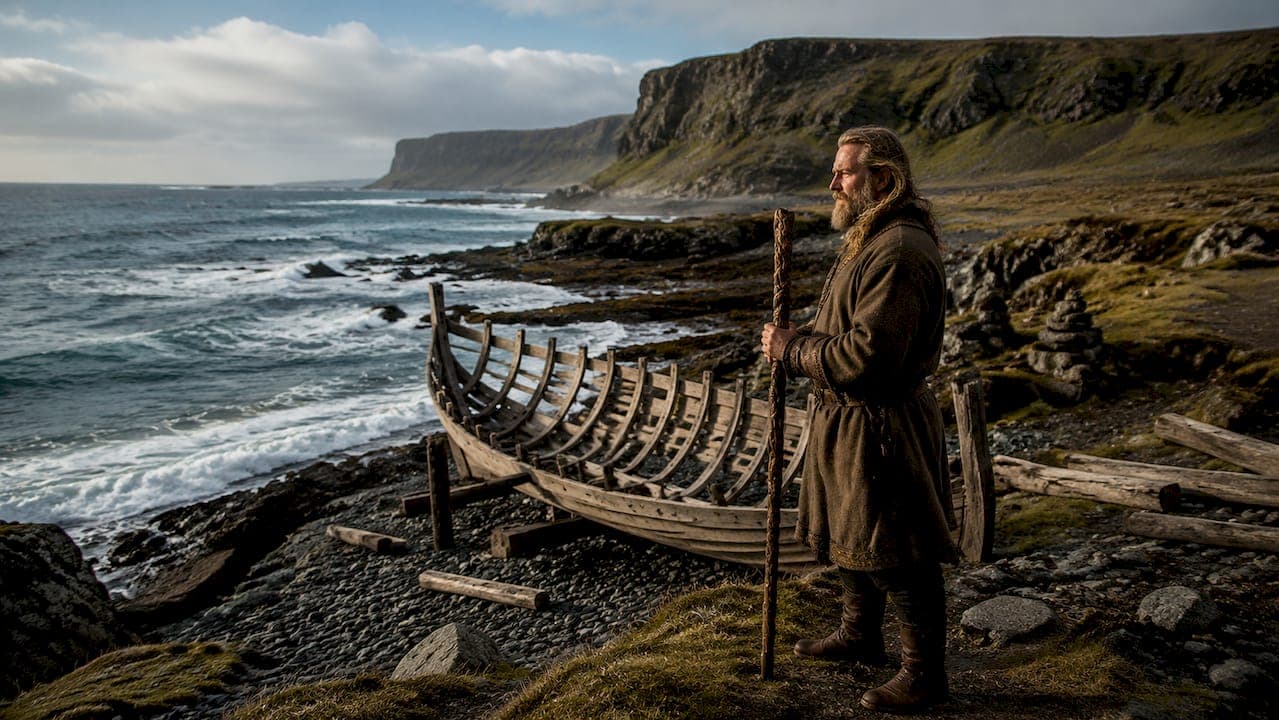
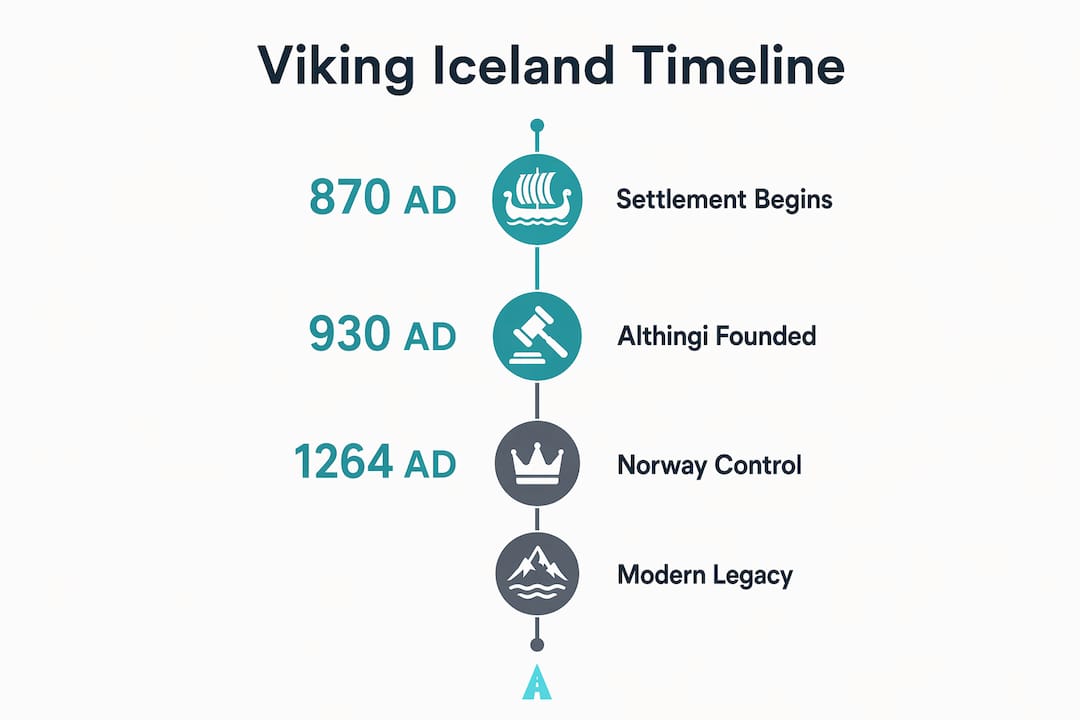
Viking settlement in Iceland unfolded in a remarkably short window. The formal settlement period ran from 870 to 930 AD, roughly sixty years that transformed an uninhabited volcanic island into a functioning Norse society.
The process began with explorers, not settlers. The Norse sailor Naddoddr is credited with one of the earliest recorded visits, followed by the Swede Garðar Svavarsson, who circumnavigated the island and wintered there. These early voyages established Iceland's existence in the Norse world. Ingólfur Arnarson then made the decisive move, bringing his household and claiming land near what is now Reykjavík around 874 AD.
Settlement spread quickly after that. Historians document roughly 400 principal settler families who claimed land across the island. The motivation was practical: land ownership and farming, not adventure for its own sake. Iceland offered open territory at a time when land in Norway and the British Isles was increasingly scarce and politically contested.
- Exploration phase (before 870 AD): Norse and Irish monks made early contact with Iceland, with Irish monks possibly present before Norse arrival.
- Pioneer settlement (870–874 AD): Ingólfur Arnarson and a small number of early settlers claimed prime coastal land.
- Mass migration (874–930 AD): Hundreds of families arrived from Norway and the Norse-controlled British Isles, filling the island's habitable coastal zones.
- Consolidation (930 AD): The Althingi parliament was founded, marking the formal end of the settlement era and the beginning of the Icelandic Commonwealth.
Archaeological evidence shows turf structures and farm remains distributed along Iceland's coasts, matching the pattern of land-hungry settlers prioritizing fertile lowland areas. These physical remains give a clearer picture of daily Viking life than the sagas alone can provide.
Pro Tip: If you want to see actual Viking-era turf structures, visit the Settlement Exhibition in Reykjavík. It is built directly over the excavated remains of a Viking longhouse dated to around 871 AD, making it one of the most tangible connections to the original settlers.
What myths and common misconceptions surround Vikings in Iceland?
The most persistent myth about Viking settlement in Iceland is that Norwegians fled there to escape the tyranny of King Harald Fairhair. This story, repeated in the sagas, paints Iceland as a refuge for freedom-loving rebels. The reality is more complicated.
Iceland was settled as a logical extension of Viking trade and settlement networks across the North Sea, not primarily as a political escape. Settlers came because land was available, not because Norway had become unbearable. The freedom narrative was a literary device that later saga writers used to frame Iceland's origins in heroic terms.
The ethnic picture is also far more mixed than popular culture suggests. Consider what the evidence actually shows:
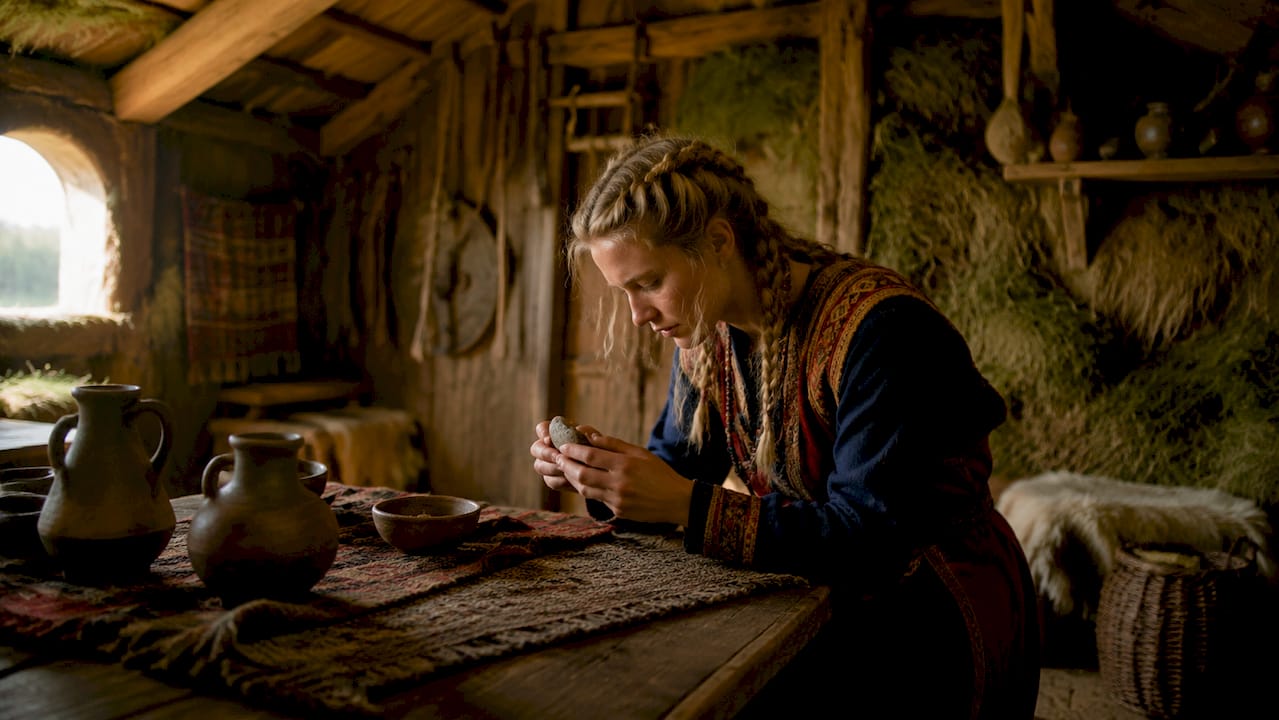
- DNA evidence reveals a significant Irish and Scottish genetic component in Iceland's founding population. Many settlers brought Celtic wives, servants, and slaves from the British Isles.
- Irish and Scottish individuals traveled to Iceland as part of Norse settler groups, adding to the island's multiethnic origins from the very beginning.
- Saga accounts were written centuries after the Viking Age and blend historical memory with medieval Christian storytelling. They are not eyewitness records.
- The "pure Norse" image of Iceland's founders does not match the genetic or archaeological record.
"Saga literature blends Viking Age memories with Christian-era narratives, requiring careful interpretation between history and myth." — History of Iceland, Wikipedia
This matters for travelers visiting Iceland today. The sites and stories you encounter are shaped by both real history and centuries of literary interpretation. Knowing the difference makes the experience richer, not less exciting.
How did Vikings shape Iceland's culture and political system?
The most lasting political contribution of Viking settlement in Iceland was the Althingi. Founded in 930 AD at Thingvellir, it was an early form of limited democracy that operated without a king. Chieftains and free men gathered annually to settle disputes, pass laws, and govern the island collectively. No equivalent institution existed in most of medieval Europe at that time.
The Althingi is recognized as one of the world's oldest parliaments. That distinction is not just a point of national pride. It reflects a genuinely unusual political structure that emerged directly from the conditions of Viking settlement, where no single powerful family could dominate the others.
| Aspect | Viking-era Iceland | Contemporary Europe |
|---|---|---|
| Governance | Althingi assembly of chieftains | Monarchies and feudal systems |
| Religion (pre-1000 AD) | Norse gods: Thor, Odin, Freyja | Predominantly Christian |
| Legal system | Oral law recited at Althingi | Written codes under royal authority |
| Social structure | Free farmers and chieftains | Serfs, nobles, and clergy |
Religion followed a similar pattern of gradual transformation. Early settlers worshipped Norse gods including Thor, Odin, and Freyja, and practiced forms of magic associated with Volvas, female seers with a distinct role in Norse spiritual life. Iceland officially converted to Christianity around 1000 AD, a decision made at the Althingi itself, not imposed by a foreign power.
The sagas that document this world were written down in the 12th and 13th centuries, long after the events they describe. They capture the values, conflicts, and social codes of Viking Iceland with remarkable detail, but they also reflect the concerns of the Christian medieval writers who recorded them. Reading the Njáls saga or the Egils saga gives you a window into both eras at once.
Pro Tip: The Iceland history timeline on Easytransfer's blog gives a clear chronological overview if you want to place Viking-era events in the broader sweep of Icelandic history before your trip.
The Viking Age in Iceland ended between 1262 and 1264 AD when Norway took political control of the island. That shift closed the Commonwealth era but did not erase the cultural foundations the settlers had built. The Althingi continued in modified form, and the sagas preserved the memory of the original society in extraordinary detail.
What are the key Viking heritage sites and cultural experiences in Iceland today?
Iceland offers more direct access to Viking history than almost any other country. The sites are not reconstructions built for tourists. Many are the actual locations where the events happened.
Thingvellir National Park is the single most important Viking heritage site in Iceland. This is where the Althingi met every summer for centuries, and the landscape itself, a dramatic rift valley where the North American and Eurasian tectonic plates meet, gives the site a physical power that matches its historical weight. Thingvellir is a UNESCO World Heritage Site and part of the popular Golden Circle route. If you are planning a Golden Circle private tour, Thingvellir is the historical centerpiece of that route.
Key sites and experiences for travelers interested in Viking history in Iceland:
- The Settlement Exhibition, Reykjavík: Built over an excavated Viking longhouse, this museum displays the actual remains of a structure dated to around 871 AD. The presentation is clear and well-designed for non-specialists.
- Saga Museum, Reykjavík: Life-size silicone figures recreate key scenes from the sagas. It is theatrical but grounded in historical research, and it works well as an introduction before visiting actual sites.
- Borg á Mýrum: The farm of Egill Skallagrímsson, one of the most famous figures in the Egils saga. The site has a striking modern sculpture and a small museum dedicated to the saga tradition.
- Stöng, South Iceland: A Viking-era farmstead buried by a volcanic eruption in 1104 AD and excavated in the 20th century. A full-scale reconstruction nearby, called Þjóðveldisbærinn, lets you walk through a Viking longhouse as it would have appeared.
- Viking Festival at Hafnarfjörður: Held annually in june, this is one of the largest Viking reenactment events in the North Atlantic. Participants come from across Europe to demonstrate crafts, combat, and daily life from the Viking Age.
Iceland's settlement history is spread across the entire island, not concentrated in one region. Planning your route in advance makes a significant difference in how much you can see in a limited time.
Pro Tip: Combine Thingvellir with the Saga Museum in Reykjavík on the same trip. The museum gives you the narrative context, and Thingvellir gives you the physical setting. Together they make the history feel real in a way that neither does alone.
Key Takeaways
Viking settlement in Iceland between 870 and 930 AD produced one of the world's oldest parliaments, a multiethnic society rooted in farming, and a literary tradition that still defines how the world understands the Norse world.
| Point | Details |
|---|---|
| Settlement timeline | Vikings settled Iceland between 870 and 930 AD, with Ingólfur Arnarson as the first permanent settler around 874 AD. |
| Mixed origins | DNA evidence confirms settlers had significant Irish and Scottish ancestry, not a purely Norse background. |
| Political legacy | The Althingi, founded at Thingvellir in 930 AD, is one of the world's oldest parliaments and a direct Viking legacy. |
| Saga caution | The sagas were written centuries after the Viking Age and blend history with medieval literary interpretation. |
| Top heritage site | Thingvellir National Park is the most historically significant Viking site in Iceland and a UNESCO World Heritage Site. |
Why Viking Iceland still surprises me after years of study
I have spent a lot of time reading about Viking history, and the thing that keeps catching me off guard is how thoroughly the popular image misses the point. Most people arrive in Iceland expecting warriors. What the evidence actually shows is farmers.
The settlers who built Iceland were overwhelmingly focused on land ownership and agricultural production. About 400 principal families documented in the historical record were not raiders. They were landholders building estates. The violence and adventure in the sagas is real, but it sits on top of a society that was fundamentally organized around sheep, hay, and property rights.
The mixed heritage point also deserves more attention than it usually gets. The fact that Irish and Scottish individuals were part of the founding population from the start changes the story considerably. Iceland was not a transplanted piece of Norway. It was something new, built from multiple cultures under unusual conditions.
What I find most valuable about visiting Iceland is that the physical landscape forces you to take the history seriously. Standing at Thingvellir, you understand immediately why this place was chosen for the Althingi. The acoustics, the natural amphitheater formed by the rift valley, the sight lines. It is not abstract history. It is geography that made a specific kind of politics possible.
If you come to Iceland only for the Northern Lights or the hot springs, you will have a good trip. If you add even one day focused on Viking heritage, you will leave with something that stays with you much longer.
— Sergiu
Traveling to Viking heritage sites with Easytransfer
Thingvellir, Borg á Mýrum, and Stöng are spread across Iceland's regions, and reaching them comfortably requires reliable private transport. Easytransfer provides door-to-door private transfers across Iceland, with vehicles ranging from premium sedans to group coaches accommodating up to 49 passengers.
Every booking includes fixed pricing with no hidden fees, flight tracking for airport pickups, and free WiFi onboard. You can request a custom quote for any pickup and drop-off location across Iceland, and a sales agent will confirm your transfer within 24 hours. For first-time visitors planning a Viking-focused itinerary, the Iceland travel tips guide on Easytransfer's blog covers practical logistics for getting the most out of your time on the island.
FAQ
Were there Vikings in Iceland?
Yes. Vikings settled Iceland between 870 and 930 AD, with Ingólfur Arnarson recognized as the first permanent settler around 874 AD.
What is the most important Viking site in Iceland?
Thingvellir National Park is the most significant Viking heritage site in Iceland. It is where the Althingi parliament was founded in 930 AD and is now a UNESCO World Heritage Site.
Did the Vikings in Iceland come only from Norway?
No. DNA evidence shows a significant Irish and Scottish genetic component in Iceland's founding population, reflecting the mixed Norse and Celtic origins of the settlers.
How accurate are the Icelandic sagas as historical sources?
The sagas are valuable but require careful reading. They were recorded centuries after the Viking Age and blend historical memory with medieval Christian storytelling, so they are not straightforward eyewitness accounts.
When did the Viking Age in Iceland end?
The Viking Age in Iceland ended between 1262 and 1264 AD when Norway took political control of the island, closing the era of the independent Icelandic Commonwealth.