
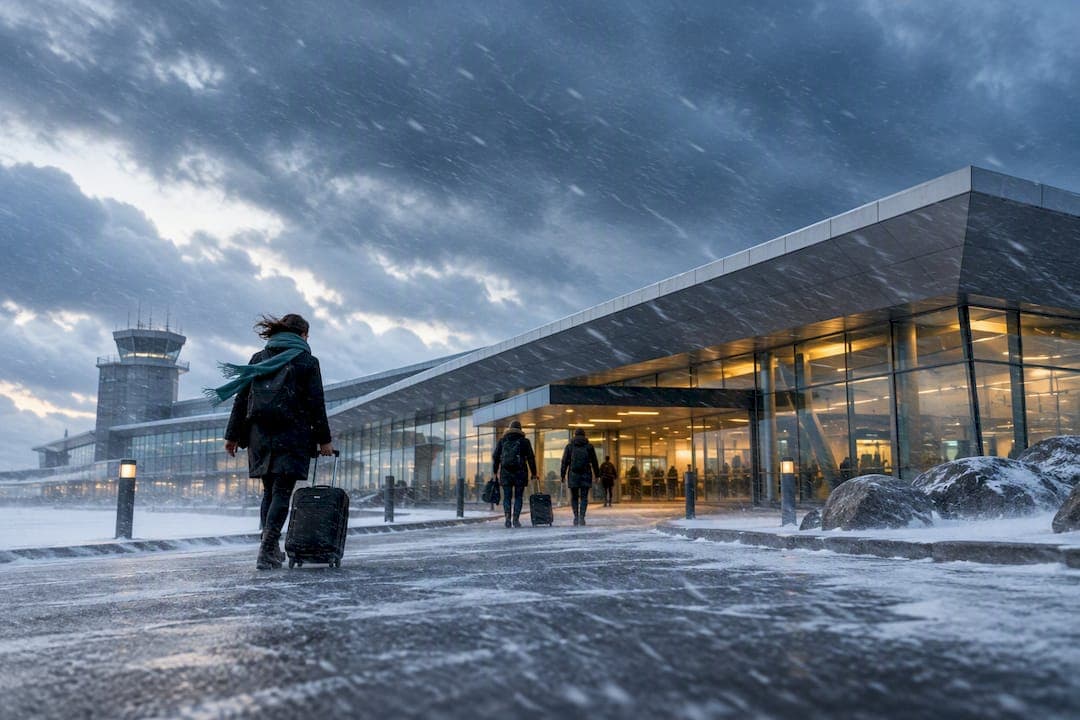
If you're flying through Keflavík during a storm alert, assume disruption is likely and act on two things immediately: check the live flight status board for your exact flight, and monitor Icelandic Meteorological Office alerts for your travel window. You may also need to arrange ground transport or a place to stay while things settle.
TL;DR:
- Storm alerts trigger large-scale cancellations at Keflavík, often grounding entire blocks of flights that can delay passengers for days and strand connecting travelers across Europe and North America.
- During severe weather, high crosswinds and reduced visibility frequently close the runway or limit ground operations, with orange and red alerts sharply increasing operational restrictions.
- Passengers should monitor the Isavia flight status and Icelandic Meteorological Office alerts, searching by specific flight number during storms and understanding that red and orange alerts can suspend ramp activity.
- Immediate actions include contacting airlines directly, documenting all expenses, and considering early booking of private transfers or nearby hotels to avoid being stranded without transportation.
- Emergency services are accessible via the Icelandic emergency number 112, and travelers with urgent medical needs should keep their insurance details handy and follow terminal guidance during severe weather alerts.
Table of Contents
- What's Happening at Keflavík Right Now
- Where to Check Live Status and Official Alerts
- Immediate Steps if Your Flight Is Delayed or Cancelled
- Getting off the Airport: Transport Options From KEF When Schedules Change
- Safety, Packing, and Payment Tips if You're Stranded
- Tips on Accommodation Options Near Keflavík Airport for Stranded Passengers
- Local Emergency Services and Support Available Near Keflavík Airport During Severe Weather
- Author Perspective: What Irish Travellers Should Prioritize
- How Easytransfer Gets You Off KEF When Storms Disrupt Your Plans
- Sources
- FAQ
What's Happening at Keflavík Right Now
Storm season at Keflavík means cancellations cluster in waves rather than trickling out one flight at a time. When March 2026 storms hit KEF, reports documented dozens of cancellations in a single stretch, with rebooking backlogs that left some passengers waiting days rather than hours. That's the pattern you should expect: airlines don't just delay a flight or two, they pull entire blocks of departures once wind speeds cross certain thresholds.
The knock-on effect reaches well past Iceland. Keflavík sits at a crossroads for transatlantic and European traffic, so a grounded evening at KEF can strand connecting passengers in Boston, Amsterdam, or Dublin the next morning.
A few things drive these disruptions:
- High crosswinds that exceed safe limits for de-icing and ground handling equipment
- Reduced visibility that slows runway operations even when winds are manageable
- Orange or Red alerts from the meteorological office, which can pause ramp activity entirely
- Staffing and equipment bottlenecks once a backlog builds, since ground crews can't process a full day's cancelled flights overnight
The airport itself rarely closes outright. What usually happens is that individual carriers cancel or delay flights based on their own risk thresholds, while KEF keeps essential operations running.
Where to Check Live Status and Official Alerts
Your first stop should be the Isavia flight information page, which mirrors the official KEF departures and arrivals board. Both update in near real time and show gate changes, estimated departure times, and outright cancellations, so refresh them rather than relying on a screenshot from an hour ago.

Pro Tip: Search your flight by number, not just by destination. Multiple flights to Dublin or London can show wildly different statuses on the same board during a storm.
Cross-check that with the Icelandic Meteorological Office's alert system. Here's what the color coding actually means:
- Yellow alert: Weather is worth watching, but disruption is unlikely
- Orange alert: Serious weather risk. Expect delays, and treat road travel with caution
- Red alert: Severe danger to life and property. Ground operations and road access are often restricted
One detail worth knowing: Orange and Red alerts don't just describe weather, they can trigger operational limits on ramp work and safety procedures at the airport itself, which is part of why a single alert level can ground so many flights at once. Your airline's app and a flight-tracking site can supplement these two sources, but they should never replace them.
Immediate Steps if Your Flight Is Delayed or Cancelled
Work through this in order:
- Check for official guidance first. If an Orange or Red alert is active, follow posted instructions inside the terminal before doing anything else.
- Contact your airline directly, through the app or a phone line rather than standing in a terminal queue. Ask specifically about rebooking on the next available flight, standby options, and any meal or hotel vouchers you're entitled to.
- Photograph everything. Boarding passes, the cancellation notice on the departure board, receipts for food or transport. You'll need these for both airline claims and travel insurance.
- Call your travel insurer the same day, not after you get home. Many policies require notification within a set window, and severe weather is often treated as a covered event rather than routine delay.
- Weigh your alternatives if the airline's rebooking window stretches past a day or two. That might mean a flight from a different Icelandic route, or simply securing a comfortable place to wait it out.
Pro Tip: Keep a single folder, digital or physical, with every receipt and reference number from the moment disruption starts. Insurers move faster when your paperwork is in one place.
Getting off the Airport: Transport Options From KEF When Schedules Change
A cancelled flight doesn't mean you're stuck at the terminal, but your usual transport plan may not hold up.
- Public shuttle buses run between KEF and Reykjavík on a set schedule, and that schedule can slip or pause entirely once roads between the airport and the capital get dicey.
- Taxis are available but become unpredictable fast during mass cancellations. Prices tend to climb and queues stretch when a few hundred passengers get dumped onto the same curb within an hour of each other.
- Private transfers solve the timing problem directly. A provider that tracks your flight automatically adjusts pickup times, so you're not left waiting or missing your ride when a flight lands four hours late.
If your itinerary is tight or you're traveling as a family or group, book a private transfer as soon as you know your new arrival time rather than waiting until you land. Providers with fixed pricing and flight monitoring, like Easytransfer, remove the guesswork of curbside taxi rates when demand spikes.
Safety, Packing, and Payment Tips if You're Stranded
Pack for the possibility of a longer wait, not just the flight itself.
- Keep chargers, medications, and one warm layer in your carry-on, even on a short hop
- Carry a physical copy of your travel insurance policy number, not just a photo on your phone
- Screenshot your booking confirmation before you lose signal or battery
Pro Tip: A power bank matters more than an extra phone charger cable during a long terminal wait, since outlets near departure gates fill up fast.
If you're Irish and need consular support, the Department of Foreign Affairs can assist with serious emergencies abroad, though most storm delays are resolved through the airline and insurer rather than consular channels. Local emergency guidance is posted throughout the terminal during active alerts.
Tips on Accommodation Options Near Keflavík Airport for Stranded Passengers
Book early once you sense a multi-day delay coming. Hotels close to KEF fill up within hours of a major cancellation wave, since everyone on your grounded flight is looking at the same short list of nearby rooms.
A few practical notes:
Rooms within a five to ten-minute drive of the terminal tend to go first, so widen your search radius toward Reykjanesbær or even Reykjavík itself if the closest options are sold out. Reykjavík is roughly 45 minutes away by road in normal conditions, and staying there gives you more restaurant and shop options while you wait out the alert.
Ask your airline before booking anything yourself. Some carriers issue hotel vouchers or have block-booked rooms for stranded passengers, particularly during multi-day disruptions, and paying out of pocket first can complicate reimbursement later. Keep your confirmation email regardless of who pays, since you'll want it for any insurance claim.
If you do book independently, choose a property with a cancellation policy that matches the uncertainty you're dealing with. A rigid non-refundable rate is a bad match for a situation where your travel dates could shift again overnight.
Local Emergency Services and Support Available Near Keflavík Airport During Severe Weather
Iceland's general emergency number is 112, covering police, medical, and fire response anywhere in the country, including at the airport. During active Orange or Red alerts, airport staff and Isavia typically post guidance directly in the terminal, and it's worth reading these notices rather than relying on secondhand information from other passengers.
Road conditions between the airport and Reykjavík can deteriorate quickly in high wind or snow, and closures on that stretch have happened during severe alerts. Check Road for real-time conditions before you commit to any ground transport, whether that's a rental car, a bus, or a private transfer.

Airport information desks can point you toward airline representatives, and most major carriers maintain a presence in the terminal during known disruption events. If you're traveling with medical needs, Iceland's health system is accessible to visitors for urgent care, though routine appointments will need to wait until conditions clear. Keep your travel insurance details handy in case you need to access care while stranded.
Author Perspective: What Irish Travellers Should Prioritize
Expect rebooking to take longer than the airline first suggests. Book your ground transport early and don't wait on airline goodwill to sort out the rest. Compare what the airline offers against independent options before assuming the airline's plan is your only path forward.
— Sergiu
How Easytransfer Gets You Off KEF When Storms Disrupt Your Plans
A private transfer service is a practical alternative to gambling on a taxi queue when your Keflavík flight lands hours behind schedule. Because some providers offer fixed pricing and flight tracking that adjusts your pickup automatically, you can skip the surge pricing and curbside chaos that hit right after a storm-driven cancellation wave.

Transfers with some providers include 24/7 support, so you are never trying to reach a human at 2 a.m. through a chatbot. Fleets offered by some private transfer providers range from sedans for solo travelers and couples to vehicles handling groups up to 49 passengers, which matters when a delayed flight means your whole party lands together and needs one coordinated ride rather than separate taxis. Booking typically takes minutes: you can request a quote with your pickup and drop-off details, get confirmation quickly, and often cancel free of charge within a cancellation window if your flight status changes.
If your connection is tight or your arrival time is still uncertain, book your private transfer from Keflavík now while you keep working the airline's rebooking line in parallel.
Sources
- Keflavík Airport Flights - Arrivals & Departures
- Keflavík Airport Flights - Arrivals & Departures (Isavia)
- En
FAQ
Are Flights to Iceland Being Cancelled Today?
Check the Isavia flight status page for the current picture, since cancellations depend on the specific storm system and can change flight by flight within hours. During active Orange or Red alerts, cancellations at KEF are common rather than rare.
Is There Bad Weather in Iceland Right Now?
The Icelandic Meteorological Office publishes current alerts and short-term forecasts for exactly this question, updated as conditions change. Orange and Red alerts signal weather serious enough to affect both flights and road travel between Keflavík and Reykjavík.
Is There Turbulence Flying to Iceland?
Turbulence risk rises during storm systems, particularly on approach or departure from Keflavík when crosswinds are strong. Pilots and air traffic control factor this into delay and cancellation decisions well before passengers board, which is part of why flights get grounded rather than flown through rough conditions.
What Is Happening in Iceland Right Now?
Conditions vary day to day, so the most reliable answer comes directly from the meteorological office's alert page and the KEF flight board rather than general news coverage. Checking both together gives you the clearest read on whether your specific travel plans are affected.