

Driving from Reykjavík to Snæfellsnes takes roughly 2 to 3 hours one way, depending on which stretch of the peninsula you're aiming for and what the roads look like that day. A full highlights loop is doable in a single long summer day, but it can feel rushed. If your schedule allows it, staying one night on the peninsula turns a frantic checklist into an actual vacation. Travelers who'd rather skip the driving altogether can book a private transfer through EasyTransfer.is instead.
TL;DR:
- Traveling by car in summer allows for a full loop in about 11 to 12 hours, but factoring in stops and variable conditions suggests starting early and planning for delays.
- The recommended route begins on the south coast, passes through Snæfellsjökull National Park at its midpoint, and finishes on the north coast to optimize lighting and minimize backtracking.
- Road conditions can change rapidly due to weather, making live updates from Icelandic authorities essential, especially for gravel or winter hiking seasons.
- An overnight stay significantly enhances flexibility, allowing visits to Kirkjufell at optimal times and a relaxed pace without rushing to fit everything into a single day.
- Using a private transfer can simplify the trip by avoiding winter driving challenges, gravel roads, and unpredictable weather, with features like flight tracking and support included.
Table of Contents
- What's the Best Route From Reykjavík to Snæfellsnes?
- How Long Does the Drive Actually Take?
- Should You Do Snæfellsnes as a Day Trip or Stay Overnight?
- Which Snæfellsnes Stops Are Worth Your Time?
- How Do You Check Road Conditions Before You Go?
- Should You Drive Yourself, Join a Tour, or Book a Transfer?
- Where to Eat and Refuel on the Peninsula
- What Makes Snæfellsnes Historically and Culturally Significant?
- Why This Guide Prioritizes Timing and Live Checks Over Guesswork
- How EasyTransfer.is Makes Snæfellsnes Easier Without a Rental Car
- Sources
- FAQ
What's the Best Route From Reykjavík to Snæfellsnes?
The route itself is simple, even if the peninsula's shape tempts you to overcomplicate it. From Reykjavík, you take Route 1 (the Ring Road) north toward Borgarnes, then peel off onto Route 54, which is the main road that actually carries you onto Snæfellsnes. Once you're on the peninsula, Route 574 loops around the national park area at its western tip and connects the south coast to the north coast.
Local guides consistently recommend one sequence over any other: hit the south coast first, treat Snæfellsjökull National Park as your pivot point, then finish on the north coast before heading back to Reykjavík.
Here's why that order works better than winging it:
- South coast first means you catch Búðir and Arnarstapi/Hellnar in the morning, when the light is softer and the coach tours haven't arrived yet.
- The national park as a midpoint lets you break up the drive with Djúpalónssandur and the glacier viewpoints, which are naturally around the peninsula's tip anyway.
- North coast last puts you at Kirkjufell in the afternoon or early evening, which happens to be when the mountain photographs best from the falls side.
- Returning via Route 54 and Route 1 avoids backtracking over the same stretch of road twice, saving you close to an hour compared to an out-and-back approach.
If you're staying in Reykjavík the night before, check pickup points and pre-trip logistics so your early start isn't eaten up by hotel confusion. Most self-drivers leave by 7:30 or 8:00 AM to make the loop work in daylight, especially outside the height of summer.
How Long Does the Drive Actually Take?
Numbers help here more than vague reassurance. The stretch from Reykjavík to the entrance of Snæfellsnes near Borgarnes takes a couple of hours, and a full loop around the peninsula adds several more hours of driving before you factor in a single photo stop.
Realistic full-day math: a complete roundtrip covering the peninsula's main sights runs close to 400 kilometers, which is achievable in one long summer day but leaves little room for lingering.
Stop durations matter more than most people expect going in. A quick viewpoint like Búðakirkja might cost you 15 minutes. Djúpalónssandur, with its short walk down to the beach, runs closer to 30 to 45 minutes. Arnarstapi to Hellnar, if you walk the coastal path between them, can easily eat 1 to 1.5 hours. Add those up across four or five stops and you'll see how a "quick loop" becomes an 11 or 12 hour day.
A few seasonal variables change this math directly:
- Daylight in December gives you barely 5 hours of usable light, while June gives you nearly 24. This alone dictates whether a day trip is even realistic.
- Wind closures on the exposed northern shore happen more often in winter than the calmer south coast.
- Gravel sections on Route 574 slow average speeds, especially after rain.
- 4x4 relevance rises sharply from October through April, when snow and ice make front-wheel-drive rentals a genuine liability rather than a minor inconvenience.
None of this means the drive is intimidating. It means the schedule you build in July should look nothing like the one you build in January.
Should You Do Snæfellsnes as a Day Trip or Stay Overnight?
The answer depends on how much you want to see and how much rushing you can tolerate. Below are three plans built around that tradeoff.
1. The short day trip (4 to 5 highlight stops). Leave Reykjavík by 7:30 AM, drive straight to Kirkjufell first (it's the farthest point, so tackling it early avoids afternoon crowds), then work backward through Grundarfjörður, Búðakirkja, and Arnarstapi on your way home. You'll be back in Reykjavík by 8:00 or 9:00 PM. This plan trims Djúpalónssandur and the glacier area, which is the right call if your day is genuinely limited to sunrise to sunset.
2. The full-day highlights loop. This is the classic Snæfellsnes day trip from Reykjavík and it requires discipline. Leave by 7:00 AM. Hit Búðir and Arnarstapi/Hellnar by mid-morning, grab lunch in Hellnar or Arnarstapi (both have small cafés with ocean views), reach Djúpalónssandur by early afternoon, swing past the Snæfellsjökull viewpoints, then finish at Kirkjufell before the light fades. If you're behind schedule by early afternoon, skip Djúpalónssandur before you skip Kirkjufell. It's replaceable; Kirkjufell generally isn't for most visitors' photo priorities.
3. The one or two-night relaxed plan. This is where Snæfellsnes actually opens up. Base yourself in Arnarstapi, Hellnar, Grundarfjörður, or Stykkishólmur, and you remove the return-drive pressure entirely. A two-night stay lets you catch Kirkjufell at both sunrise and sunset, walk the full Arnarstapi to Hellnar coastal trail without watching the clock, and add a guided glacier or cave activity that a single day trip simply can't accommodate. Stykkishólmur also gives you a genuinely different base, with harbor views and easier access to ferry connections if you're continuing toward the Westfjords.
If you're weighing this against other options near the capital, it's worth comparing against other day trips from Reykjavík to see where Snæfellsnes ranks on the effort-to-reward scale. Short version: it ranks near the top, but it rewards an overnight more than most.
Which Snæfellsnes Stops Are Worth Your Time?
Not every stop deserves equal billing, and treating them that way is how day trips fall apart by 3:00 PM.
- Kirkjufell and Kirkjufellsfoss. This is the mountain you've seen on every Iceland postcard, and it earns the reputation. Photographers often linger here for an hour or more chasing the right light, so treat it as flexible rather than a five-minute photo stop if that matters to you. Sunrise and evening light both work; midday sun tends to flatten the shot.
- Djúpalónssandur. A black sand beach with dramatic rock formations and rusted shipwreck debris, reachable by a short walk from the car park. The one real caution here: waves reach farther up this beach than they appear to, and sneaker waves have caught visitors off guard. Stay well back from the water's edge and budget 30 to 45 minutes for the walk down and back.
- Arnarstapi and Hellnar. These two villages connect via a coastal walking path with sea arches, bird cliffs, and lava formations. Parking is available at both ends, so you can walk one direction and drive back if you're short on time. Budget an hour minimum if you want to walk the full path.
- Búðakirkja and the glacier viewpoints. The small black church at Búðir is a two-minute stop for most people, though the setting against the mountains makes it worth the detour. The Snæfellsjökull viewpoints along Route 574 are similarly quick unless you've booked a guided activity like the Vatnshellir lava cave tour, which runs seasonally and needs advance booking.
Pro Tip: If you only have time for two stops, make them Kirkjufell and the Arnarstapi to Hellnar walk. They deliver the most visual payoff per minute spent, and neither requires a guide or advance booking.
How Do You Check Road Conditions Before You Go?
Icelandic weather changes fast enough that yesterday's plan can be wrong by breakfast. Two live tools matter more than anything else you'll read in a guidebook.
Road.is is the authoritative source for real-time conditions on Icelandic roads, and it's worth treating as the final word rather than a suggestion. Google Maps doesn't reliably reflect Icelandic road closures, so don't lean on it alone for this trip. Vedur.is gives you the wind and weather forecast, which matters just as much as the road status itself on Snæfellsnes, where coastal gusts can make driving unpleasant even on a technically "open" road.
The 30 to 60 minute rule. If a road status flips from closed to open, wait half an hour to an hour before driving it. Crews often finish clearing just ahead of reopening, and lingering ice or debris on the surface can catch you out in that window right after they leave.
On vehicle choice: a standard 2WD rental handles the Route 54 and Route 574 loop fine in summer, even with the gravel sections, according to live status tracking from Map of Iceland. From roughly October through April, that changes. The exposed northern shore sees far more snow and wind closures than the sheltered south side, and a 4x4 stops being a nice-to-have.
A short checklist worth keeping in the car regardless of season:
- Full tank before you leave Reykjavík or Borgarnes; fuel stations thin out on the peninsula itself.
- A charged phone and a portable charger, since coverage gaps exist in some of the more remote stretches.
- Warm layers and a blanket, even in summer, in case of a breakdown or extended wait.
- The emergency number 112, which works nationwide and has an app version with location sharing.
Should You Drive Yourself, Join a Tour, or Book a Transfer?
Each option trades convenience against flexibility differently, and the right call depends on your group size and how much you want to control the pace.
Organized full-day tours come with a guide who handles logistics and adds context you'd otherwise miss, but the schedule is fixed. If you want an extra 20 minutes at Kirkjufell chasing light, the bus doesn't wait.
Public buses technically connect towns on the peninsula, but they run multi-leg routes with limited stops. If your goal is hopping between Djúpalónssandur, Arnarstapi, and Kirkjufell in one day, a bus schedule works against you far more than it helps.
Private transfer through EasyTransfer.is removes the driving decision entirely. It's a door-to-door service with flight tracking, fixed pricing, and 24/7 support, which matters most for groups who want to split one vehicle's cost, winter travelers who'd rather not test their nerve on an unfamiliar gravel road, or anyone whose schedule doesn't leave room for a wrong turn.
For Irish travelers used to relatively forgiving roads back home, Icelandic winter driving conditions can be a genuine adjustment. A transfer sidesteps that learning curve completely, and it's worth weighing against the cost of a rental plus insurance once you add up a group's total spend.
Where to Eat and Refuel on the Peninsula
Dining options on Snæfellsnes are modest by design, this is a rural coastline, not a restaurant district, but they're placed well for a road trip. Borgarnes, right where Route 1 meets Route 54, has the last cluster of larger supermarkets and fuel stations before you commit to the peninsula loop, so it's worth topping up there.
On the peninsula itself, Hellnar and Arnarstapi both have small cafés serving soup, fish, and coffee with ocean views that make a lunch stop feel like part of the sightseeing rather than a detour from it. Grundarfjörður, near Kirkjufell, has a slightly wider range of casual restaurants and a grocery store, useful if you're basing yourself there overnight. Stykkishólmur, the peninsula's largest town, offers the most variety, including seafood restaurants that lean into the local catch.
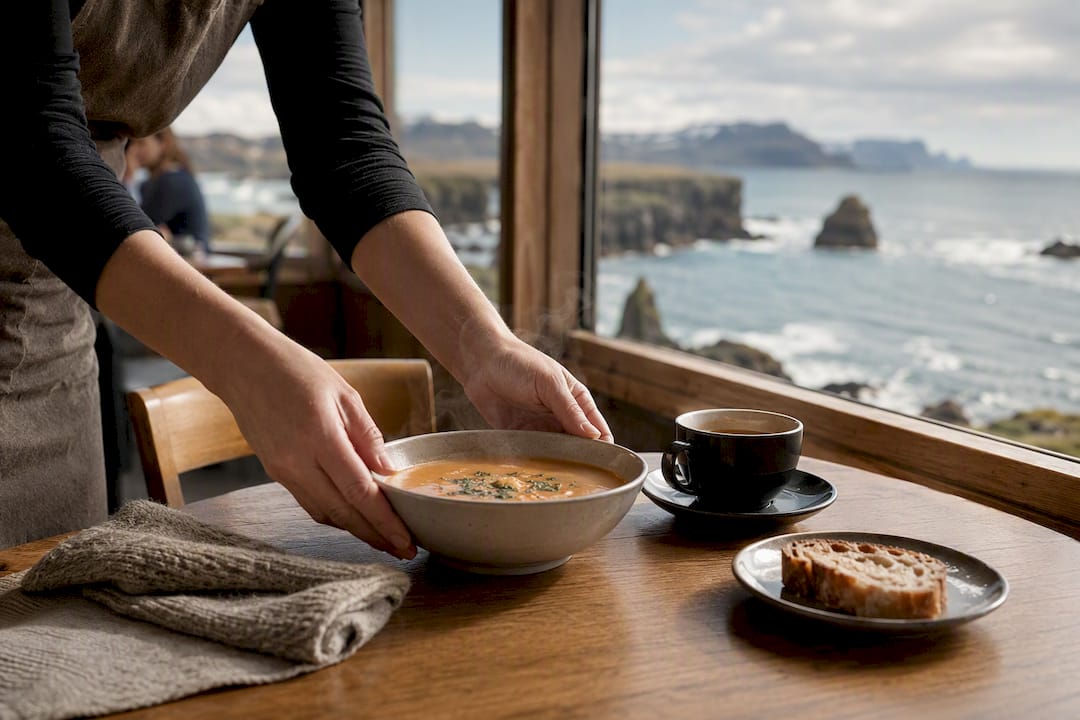
Fuel stations exist in Borgarnes, Grundarfjörður, Ólafsvík, and Stykkishólmur, but they're spaced out enough that running low between towns isn't a great idea. Fill up whenever you pass a station below half a tank, particularly heading into the more remote western tip near the national park, where the next pump can be a genuine hour away.
What Makes Snæfellsnes Historically and Culturally Significant?
Snæfellsnes carries more cultural weight than its postcard scenery might suggest. The peninsula's glacier volcano, Snæfellsjökull, served as the entry point to the center of the Earth in Jules Verne's 1864 novel, a detail that still draws literary travelers today. Long before that, the region featured prominently in Icelandic sagas, including Eyrbyggja saga, which chronicles feuds and settlements along this coastline dating back to the 9th and 10th centuries.
The fishing villages you'll pass through, Ólafsvík, Grundarfjörður, Stykkishólmur, built their economies on the same North Atlantic waters visible from Route 54 today. Stykkishólmur in particular retains a cluster of well-preserved 19th-century wooden buildings that reflect Iceland's trading history with Denmark. Arnarstapi and Hellnar, meanwhile, sit near locations tied to folklore about hidden people and protective spirits said to inhabit the surrounding lava fields, stories still referenced by locals with a mix of humor and genuine respect.
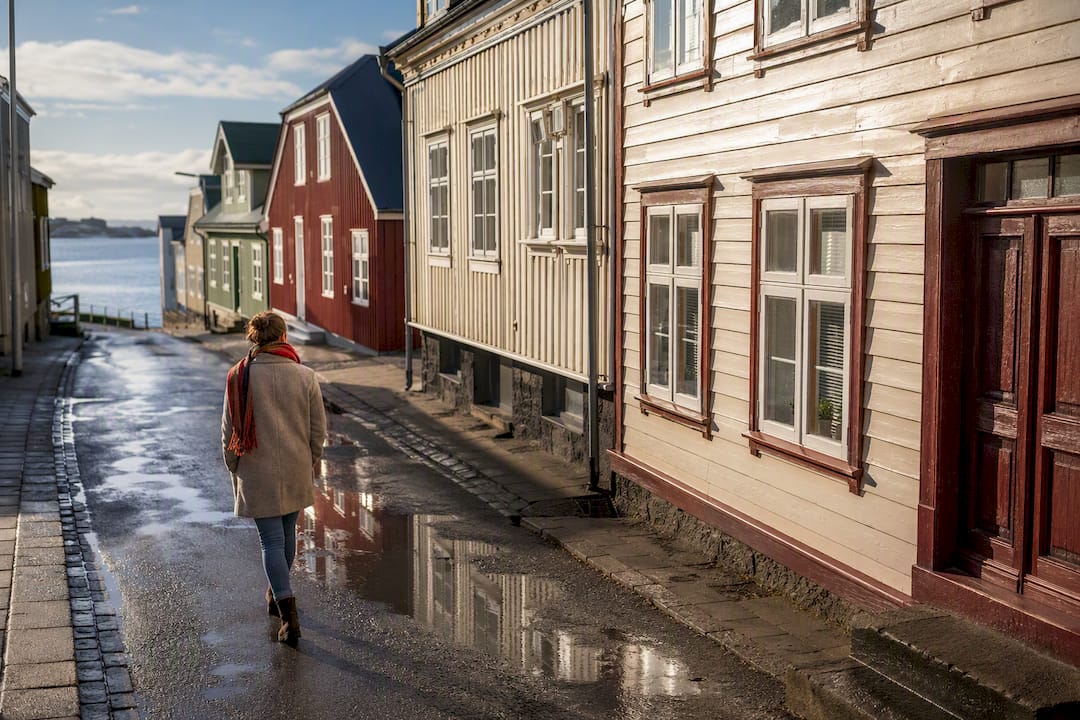
Understanding this layered history changes how the drive feels. Kirkjufell stops being just a famous mountain and becomes part of a landscape that's shaped sagas, inspired fiction, and sustained fishing communities for over a thousand years.
Why This Guide Prioritizes Timing and Live Checks Over Guesswork
Most driving advice for Snæfellsnes glosses over how much weather actually dictates the day. In practice, delays cluster around two spots: the exposed stretch of Route 574 near the national park, where wind gusts hit hardest, and the Kirkjufell area, where photographers routinely blow past their planned stop time chasing light. Neither delay shows up in a generic itinerary.
Staying overnight solves both problems at once. It gives photographers the flexibility to return to Kirkjufell at a better hour without wrecking the rest of the day, and it gives everyone else a calmer pace instead of a countdown clock.
The single biggest planning mistake isn't picking the wrong stops, it's assuming Route.is and Vedur.is are optional extras rather than the first thing you check every single morning of the trip.
This guide leans on those live tools, plus route data from Map of Iceland, rather than fixed assumptions about what the road will look like on any given day.
— Sergiu
How EasyTransfer.is Makes Snæfellsnes Easier Without a Rental Car
Easytransfer is the alternative to renting and self-driving for Snæfellsnes, removing the challenges of gravel roads and winter conditions. A private transfer gets you door-to-door across Iceland in a premium vehicle with flight tracking built in so delays never leave you stranded.
Pricing details can be found on the EasyTransfer website. Every reservation includes free WiFi onboard and 24/7 customer support, and flexible cancellation policies. This setup suits groups splitting a vehicle, families seeking convenience, and travelers who'd prefer someone else handle winter driving.
To get a quote, visit the private transfer booking page, enter your pickup and drop-off locations, and receive pricing and availability details from EasyTransfer.
Sources
Check these before you leave, not the night before you land:
- How to get to Snaefellsnes Peninsula — Iceland Lovers
- Can I Drive the Snæfellsnes Peninsula Today? Live Status | Map of Iceland
- Snæfellsnes Peninsula road trip — ThingsToDoInIceland
FAQ
How Long Does It Take to Drive From Reykjavík to Snæfellsnes?
The drive to the peninsula's entrance near Borgarnes takes a couple of hours, and a full loop around Snæfellsnes adds several more hours of driving before sightseeing stops.
Is It Worth Going to Snæfellsnes Peninsula?
Yes. Snæfellsnes packs glacier views, black sand beaches, sea cliffs, and one of Iceland's most photographed mountains into a single peninsula, making it one of the most efficient regions to visit outside Reykjavík.
Should I Bring Toilet Paper to Iceland?
Most fuel stations, cafés, and rest stops on the Snæfellsnes route have working restrooms, so it's not a required precaution, though carrying a small travel pack is a reasonable habit for remote stretches.
Do You Need a 4x4 for Snæfellsnes Peninsula?
A standard 2WD generally handles the route fine in summer, but a 4x4 is recommended from roughly October through April, when the exposed northern shore sees more snow and wind closures. If you'd rather skip the vehicle decision entirely, a private transfer through EasyTransfer.is removing the question altogether.