
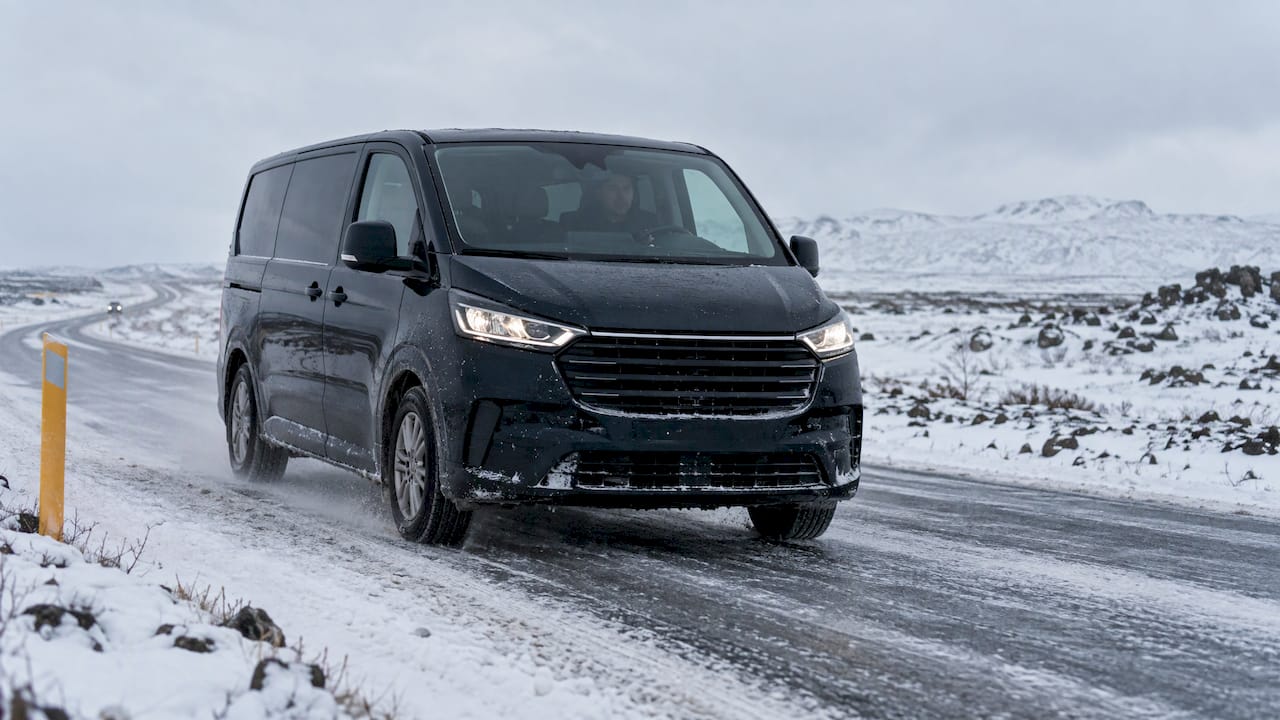
Driving out of Keflavík Airport in winter is doable, but your first hours in Iceland are the riskiest part of the trip: short daylight, wind that can change quickly, ice on roads that look clear, and a body that may have just crossed the Atlantic overnight. If you want to arrive rested and keep your energy for the trip itself, the simplest plan is to let a licensed local driver take the first stretch. Our private Keflavík transfers start from 45 USD per traveler, one-off, and a driver who knows the road handles the weather for you.
This guide covers what the roads are really like, how to check them before you leave the terminal, what to do after a red-eye flight, and how to drive safely if you do take the wheel.
TL;DR
- Winter roads from Keflavík are serviced, not ice-free. Ice, wind and drifting snow can appear even where the road looks clear, and storms can close roads without warning.
- Check three sources before you leave: umferdin.is for roads, vedur.is for weather and wind, and SafeTravel for warnings. You can also call 1777 for road conditions.
- After an overnight flight, be well rested before you drive. SafeTravel suggests resting a few hours, for example in a hotel near the airport.
- A private transfer removes the problem. Flight tracking, fixed pricing and free cancellation up to 24 hours before pickup make the first day predictable.
- If you drive, slow down and leave extra distance. Clear all ice and snow from windows, mirrors, lights and roof, and keep your plans flexible.
Table of Contents
- What winter roads around Keflavík are really like
- How to check conditions before you leave the airport
- Driving after a red-eye flight
- If you do drive: a winter checklist
- Why a private transfer makes the first day easier
- Book your winter transfer
- Our view on winter arrivals
- FAQ
- Sources
What winter roads around Keflavík are really like
The road between the airport and Reykjavík is a main route that is cleared regularly in winter. That is reassuring, but it does not mean the surface is dry. The Icelandic Road and Coastal Administration (Vegagerðin) explains that winter maintenance is planned around forecasts, road and weather conditions and traffic flow, and that servicing a road does not make it ice-free.
Three things matter most for a visitor.
Ice that you cannot see coming. Vegagerðin lists several ways ice forms: snowfall, freezing rain, freezing fog, and rain falling on a road that is already icy. It adds that bridges, lowlands and shaded stretches are especially prone to it. If you are used to winter driving at home, this is the part that surprises people: conditions change within a few kilometers.
Wind and blowing snow. SafeTravel, Iceland's national safety portal, says weather can change quickly and that strong wind, snow, rain or drifting snow can make driving difficult or dangerous even when the road appears clear. The area around the airport is open and exposed, so crosswinds are a real factor, and so is reduced visibility when snow blows across the road.
Closures. Vegagerðin states that severe storms can close roads without warning, and that freezing temperatures and limited daylight make conditions dangerous even for experienced winter travelers. A road that is normally open should not be assumed open when your flight lands. For what a closure means for your timing, see our note on road closures and transfers.

If you come from Ireland, our guide to winter airport transfers for Irish travelers explains how a winter arrival usually plays out.
How to check conditions before you leave the airport
Icelanders check before every longer drive, and you should too. The official guidance is simple and takes five minutes.
- Roads: the national travel advice page says to check umferdin.is for road movement, road conditions and wind, and to use the webcams where available.
- Weather: check vedur.is, the Icelandic Meteorological Office, for weather warnings and wind strength.
- Special dangers: consult SafeTravel for warnings. It also lets you log a travel plan so the authorities know where you are heading.
- By phone: Safe.is recommends checking road conditions online or by calling 1777.
- Decide: Vegagerðin's advice for severe weather is to delay travel if possible. If you must go, monitor forecasts and be ready for sudden drops in visibility, slippery surfaces or closures.
Here is the same list as a quick reference:
| What you need to know | Where to look |
|---|---|
| Road conditions, closures, wind | umferdin.is, or call 1777 |
| Weather warnings, wind strength | vedur.is |
| Special dangers, logging your plan | SafeTravel |
| Flight delays and airport updates | Your airline and the airport's alerts |
The last row matters more than it seems. When a storm hits, flights are often the first thing to move, and a delayed arrival changes who is waiting for you and when. Our guide to storm travel and airport alerts at Keflavík shows how to follow them.
Driving after a red-eye flight
This is the question most North American and Irish travelers do not ask until they are standing at the rental desk. SafeTravel is direct about it: after an overnight flight you may feel jet-lagged, drowsy or fatigued, especially when coming from America, and you should be well rested before you drive. Its suggestion is to consider a hotel near the airport and rest for a few hours in the morning.
Now add what winter does to the same morning:
- It is often still dark when you land.
- Safe.is points out that short daylight and darkness call for extra following distance and lower speeds.
- The road is unfamiliar, the signs are new, and the weather may differ from the forecast you read at home.
If you are coming from Boston, New York, Chicago, Seattle, Washington or another US gateway, you will probably land early in the morning after a night flight. That is exactly when a tired driver faces the least familiar conditions. You have two sensible options: rest first, or let someone else drive.
A private transfer fits the second option. You land, walk out, and sit in a heated vehicle with free WiFi while a licensed, English-speaking driver deals with the road. You can sleep, message your hotel, or simply look out of the window. If your flight arrives at night, see how a flight-monitored night transfer to Reykjavík works.

If you do drive: a winter checklist
Some travelers will still plan a self-drive trip later in their stay, once they are rested. These are the points that official sources stress, and they apply to every winter drive, not just the first one.
Before you set off
- Check the vehicle suits your route. SafeTravel's guidance is to confirm the vehicle is suitable for the planned trip and has appropriate winter equipment, such as winter tires.
- Switch on your lights and check front and rear. Do this every time you start.
- Clear everything. Remove snow and ice from windows, mirrors, lights and roof. A sheet of snow can slide from the roof onto your windshield when you brake.
- Learn the local guidance. The Icelandic Transport Authority recommends that foreign drivers use SafeTravel's driving information and read it before driving.
On the road
- Slow down and leave space. Winter roads may be slippery or covered with ice and snow, which lengthens your braking distance. SafeTravel recommends slowing down and leaving more space to stop and steer.
- Treat the speed limit as a ceiling. Safe.is advises slowing down on ice instead of using the legal limit as a target.
- Keep plans flexible. If conditions worsen, wait in a safe location rather than pushing on.
- Allow for darkness. In midwinter, plan your driving around the daylight you actually have.
If you are used to long North American road trips, the habits that serve you there still help here: plan routes, pace the day, and keep a margin. A Nova Scotia road trip guide shows the same logic of routes and timing that applies to an Icelandic winter itinerary. The difference in Iceland is that the margin has to be wider, because the weather can close the road behind you.
Why a private transfer makes the first day easier
The airport leg is short, but it is the leg where several risks stack up: fatigue, darkness, unfamiliar roads and changing weather. Here is how a private transfer with us deals with each one.
| Winter problem | What a private transfer does |
|---|---|
| You land tired after an overnight flight | A licensed, English-speaking driver takes the wheel while you rest |
| Your flight is delayed by weather | We track your flight in real time and adjust automatically for delays |
| You worry about the final price | Pricing is fixed, with no hidden fees |
| Plans change | Free cancellation up to 24 hours before for a full refund |
| Something goes wrong at night | 24/7 customer support |
| You travel as a family or group | Vehicles for any group size, up to 49 passengers |
Our fleet includes Mercedes, Tesla and Toyota vehicles, and you receive instant booking confirmation, so you know the pickup is arranged before you fly. Prices start from 45 USD per traveler, one-off, for the Keflavík Airport (KEF) transfer to or from Reykjavík, for any group size. The Blue Lagoon and Sky Lagoon transfers from Reykjavík or Keflavík Airport each start from 36 USD per traveler, one-off.
Who this suits best
- Travelers 35 and over from the US East Coast, Midwest and beyond, landing on a night flight with a full day of plans ahead.
- Families with children, who do not want to handle car seats, luggage and a dark road in one go.
- Groups and school parties, where one vehicle for everyone is easier than several rental cars.
- Cruise passengers arriving in Reykjavík, who want a set pickup for a day around the city or a trip to a lagoon.
- Business travelers, who need to arrive on time and ready for a meeting.
- Travel agents and tour operators, who can connect with us to arrange transfers for their clients.
For the route itself, our Keflavík to Reykjavík transfer guide walks through what to expect, and the airport facilities guide helps you find the right exit and meeting point.
Book your winter transfer
We run private airport and destination transfers across Iceland, with door-to-door service, flight tracking and fixed pricing. If your pickup or drop-off is outside the standard routes, use the quote form with your preferred locations, and one of our sales agents will get back to you within 24 hours.

For the standard routes, you can book a private transfer directly. Once you are rested and settled in Reykjavík, our private day tours let you see the country without driving yourself: the Golden Circle Classic Tour with Kerið Crater starts from 1550 USD per group, the Private Northern Lights Evening Tour from 950 USD per group, and the South Coast tour with Vík and Black Sand Beach from 1800 USD per group. You can see all of them on our private day tours page.
Our view on winter arrivals
We spend winter days watching the same things you will read about in the forecasts: wind, snow and delayed flights. Our view is that the first hours of an Icelandic trip should be the easiest part, not the hardest.
The roads are serviced and the people who maintain them do a serious job. But after a night flight, in the dark, with unfamiliar conditions, the best way to start is to be a passenger. That is why we build every transfer around the same few things: we follow your flight, we agree the price in advance, and our licensed, English-speaking drivers are there when you walk out.
If the weather changes your plans, you can cancel up to 24 hours before for a full refund, and our support team is available around the clock. Arrive rested, and save the adventure for the days you have planned for it.
Sergiu
FAQ
Is it safe to drive from Keflavík Airport in winter?
The main roads are serviced regularly, but ice, wind and drifting snow can still make driving difficult or dangerous, and storms can close roads. Check umferdin.is, vedur.is and SafeTravel before you leave, and delay your trip if conditions are severe. If you prefer not to manage this after a long flight, a private transfer covers the airport leg.
Should I drive right after a red-eye flight?
SafeTravel advises being well rested before driving and notes that fatigue is common after overnight flights, especially from America. It suggests resting for a few hours, for example in a hotel near the airport. A transfer with a driver lets you rest on the way to Reykjavík instead.
Who do I call for road conditions in Iceland?
The number to save is 1777, which Safe.is recommends for road conditions. You can also check umferdin.is online. Save the number in your phone before you land.
What happens to my transfer if my flight is delayed?
We track your flight in real time and adjust the pickup automatically for delays. Your price stays fixed, and you can cancel up to 24 hours before for a full refund.
Can you take a large group from Keflavík in winter?
Yes. Our fleet accommodates up to 49 passengers, and the Keflavík transfer is available for any group size. For a custom route anywhere in Iceland, send us your pickup and drop-off locations through the quote form.
Sources
- Winter services – Vegagerðin
- Driving safely in Iceland – Vegagerðin
- Weather warnings and precautions – Vegagerðin
- Winter driving – SafeTravel
- How to Drive in Iceland – SafeTravel
- Travelling in bad weather, high winds or bad surface conditions – island.is
- Educational material for foreign drivers – island.is
- Driving conditions – Safe.is
- Nova Scotia road trip: routes, timing and a Wolfville base