
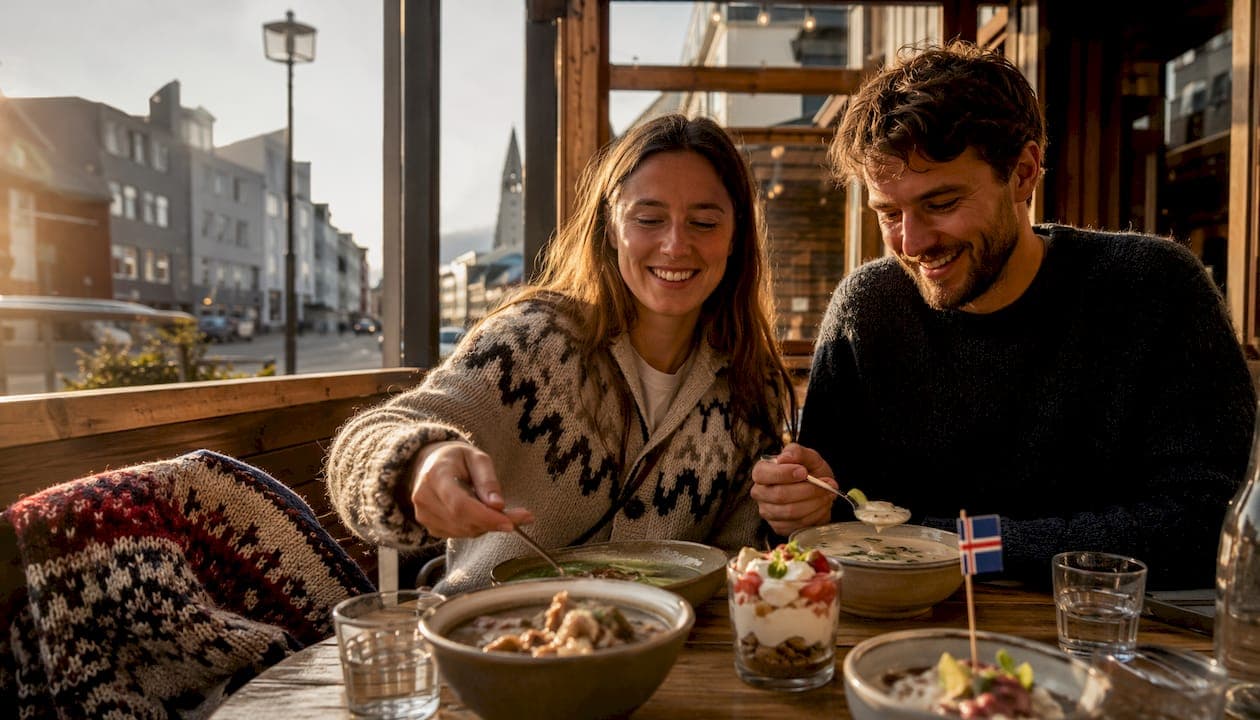
TL;DR:
- Try Icelandic street food with pylsur, which is quick, affordable, and widely available in Reykjavík. You can cook traditional dishes like kjötsúpa or plokkfiskur if you have kitchen access, with ingredients easily found in local supermarkets. Reykjavík serves as an ideal base to sample these authentic foods, and private transfers help optimize your travel and eating schedule.
The five Icelandic recipes every traveler should know are kjötsúpa (lamb soup), plokkfiskur (fish and potato stew), skyr parfait, rúgbrauð (dense rye bread), and pylsur (Icelandic hot dogs). Together, they cover the three pillars of Icelandic cuisine: lamb, fish, and dairy, plus the country's most iconic street food and its signature geothermal-baked bread.
Quick picks for travelers:
- Try first: Pylsur. Available at stands across Reykjavík, under 1,000 ISK, no cooking required.
- Cook if you have a guesthouse kitchen: Kjötsúpa. Simple ingredients, one pot, deeply satisfying after a cold day out.
- Grab daily: Skyr from any Bónus or Krónan supermarket for 250–450 ISK per cup.
- Best travel snack: Harðfiskur (dried fish) with butter. Shelf-stable, sold at gas stations, and genuinely filling.
- Seek out: Rúgbrauð. Dense, slightly sweet, and unlike any bread you've had before.
Pro Tip: If you're arriving at Keflavík Airport, ask your Easytransfer driver to stop at a gas station on the way into Reykjavík. You can pick up harðfiskur and skyr within the first hour of landing.
Reykjavík is your best base for tasting all of these dishes. With an Easytransfer private transfer connecting you to the airport, Blue Lagoon, and beyond, you can plan food stops around your route rather than scrambling for taxis between meals.
Table of Contents
- 7 Icelandic food recipes you can cook or recognize on the road
- Where to buy ingredients in Iceland and smart U.S. substitutions
- What Icelandic cooking methods tell you about the food you're tasting
- How and where to taste these dishes while you're in Iceland
- A compact 2–3 day food plan for a short Iceland trip
- Food safety, dietary notes, and a few honest cautions
- Key Takeaways
- The honest short-trip take
- Further reading and reliable references
7 Icelandic food recipes you can cook or recognize on the road
| Recipe | Cook Time | Difficulty | Servings |
|---|---|---|---|
| Kjötsúpa | — | Easy | 4 |
| Plokkfiskur | — | Easy | 3–4 |
| Skyr parfait | 5 min | Very easy | 1–2 |
| Rúgbrauð (skillet) | 50 min | Moderate | 8 slices |
| Pylsur | 10 min | Very easy | 2 |
| Harðfiskur with butter | — | No cook | 1–2 |
| Kleinur | 30 min | Moderate | 12 pieces |
1. Kjötsúpa (Icelandic lamb soup)
A rustic, warming soup of bone-in lamb, root vegetables, and oats. Ingredients: 1 lb lamb shoulder, 2 potatoes, 1 turnip, 2 carrots, 1 onion, 2 tbsp oats, salt, water. Method: Simmer lamb in salted water 30 minutes, add chopped vegetables and oats, cook 30 more minutes. US substitution: any bone-in lamb cut works; rutabaga replaces turnip.
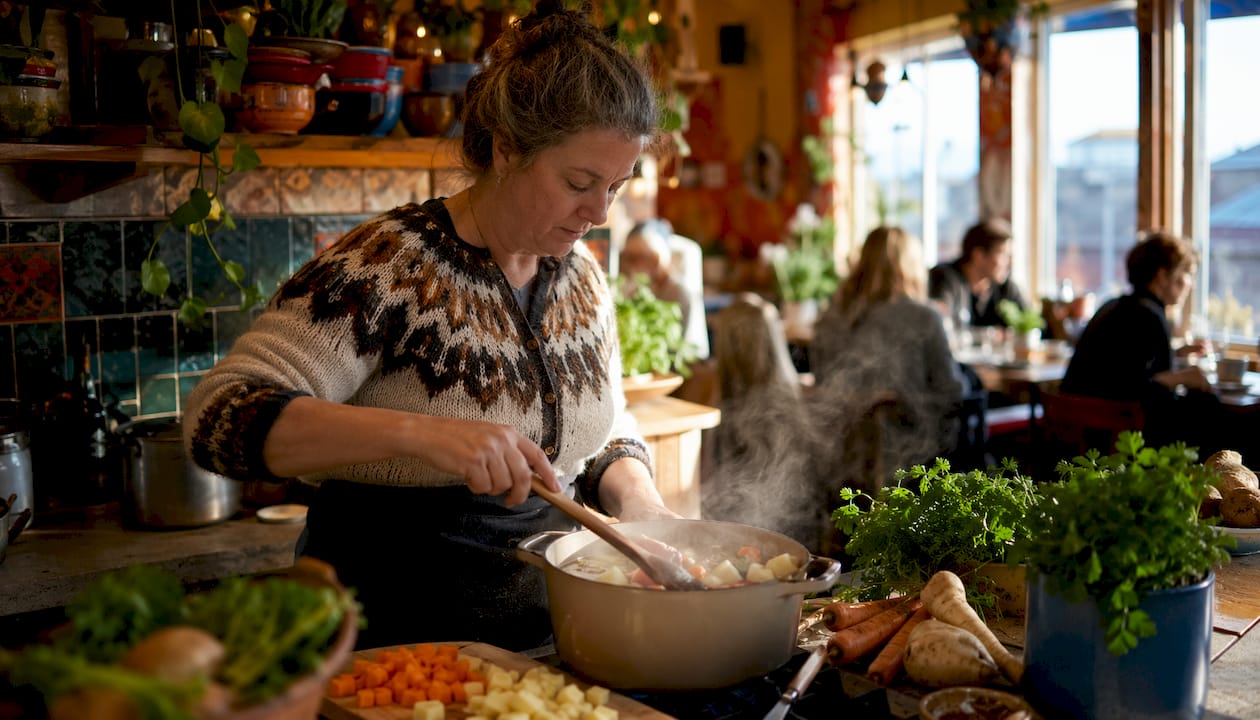
Pro Tip: Make a double batch. Kjötsúpa tastes better the next day, and it reheats easily in a guesthouse microwave.
2. Plokkfiskur (fish and potato stew)
Creamy cod and potato stew, often finished with a béchamel-style sauce. Ingredients: 1 lb cod fillet, 3 potatoes, 1 onion, 2 tbsp butter, 1 cup milk, salt, pepper. Method: Boil potatoes and fish separately, flake fish, sauté onion in butter, add milk to make a light sauce, fold in fish and potato. US substitution: haddock or tilapia for local white fish.
3. Skyr parfait (easy breakfast or snack)
Skyr is technically a soft cheese made from strained cultured skim milk, higher in protein than most yogurts. Ingredients: 1 cup plain skyr, 2 tbsp honey or jam, handful of granola or berries. Method: Layer in a glass. Done. US substitution: full-fat plain Greek yogurt, though authentic Icelandic skyr is noticeably thicker and more sour.
4. Rúgbrauð (skillet adaptation)
Geothermal baking gives traditional rúgbrauð its dense, crustless, faintly sweet texture. This skillet version mimics it. Ingredients: 2 cups dark rye flour, 1 cup buttermilk, 2 tbsp molasses, 1 tsp baking soda, pinch of salt. Method: Mix, pour into a greased skillet, cover tightly, cook on lowest heat 45–50 minutes. US substitution: dark rye flour is available at Whole Foods or online; pumpernickel flour works in a pinch.
5. Pylsur (Icelandic hot dog)
Pylsur are made from a lamb, beef, and pork blend and traditionally ordered "eina með öllu" (one with everything). Ingredients: 2 lamb-blend hot dogs, buns, ketchup, sweet mustard, remoulade, raw onion, crispy fried onion. Method: Grill or pan-fry dogs, load toppings in order. US substitution: any lamb-beef hot dog; Trader Joe's carries lamb sausages that work well.
6. Harðfiskur with butter (no-cook snack)
Dried fish sold at supermarkets and gas stations across Iceland. The drying process concentrates flavor intensely. Ingredients: Packaged harðfiskur (haddock or cod), salted butter. Method: Tear into strips, spread with butter, eat. US substitution: Icelandic-brand harðfiskur is available on Amazon; Scandinavian specialty stores carry it too.
7. Kleinur (Icelandic fried pastry)
A twisted, lightly spiced fried dough, fluffy inside and crisp outside. Ingredients: 2 cups flour, ½ cup sugar, 1 tsp cardamom, 1 tsp baking powder, ½ cup milk, 1 egg, 2 tbsp butter, oil for frying. Method: Mix dough, roll flat, cut into trapezoids, slit center, pull one end through, deep-fry until golden. US substitution: vegetable oil works fine; cardamom is the non-negotiable flavor.
Where to buy ingredients in Iceland and smart U.S. substitutions
Iceland's three main discount supermarket chains are Bónus, Krónan, and Nettó. All three stock skyr, smoked fish, rye bread, and staples at prices locals actually pay. Bónus is the cheapest and has the widest footprint across Reykjavík and larger towns.
What to buy where:
- Bónus / Krónan / Nettó: Skyr (250–450 ISK), rúgbrauð slices, harðfiskur, butter, oats, root vegetables for kjötsúpa.
- Fish markets and harbor stalls: Fresh cod, haddock, and langoustine. Prices vary; morning visits get the best selection.
- Gas stations (N1, Orkan): Harðfiskur, pylsur, and packaged skyr. Open late and often 24 hours, useful between transfers.
- Souvenir food stalls: Packaged harðfiskur and skyr-flavored items. Pricier, but vacuum-sealed for travel.
Pro Tip: Supermarket breakfasts (skyr + rúgbrauð + coffee) cost under 1,000 ISK. Pair that with one sit-down dinner and you'll eat well without spending 10,000 ISK a day.
For US travelers cooking at home before or after the trip: plain full-fat Greek yogurt replaces skyr adequately. Fresh cod from any fish counter replaces local white fish in plokkfiskur. Dark rye flour from Whole Foods or Bob's Red Mill handles rúgbrauð. The one item worth buying authentic is harðfiskur. The flavor and texture are genuinely hard to replicate.
What Icelandic cooking methods tell you about the food you're tasting
Iceland's preservation techniques shaped its entire flavor profile. Limited salt historically pushed cooks toward smoking, fermenting, drying, and geothermal baking. Those methods still explain why the food tastes the way it does today.
The four key methods:
- Smoking: Hangikjöt (smoked lamb) gets its deep, almost woody flavor from birch or sheep dung smoke. You'll recognize it by the dark color and strong aroma.
- Drying: Harðfiskur is wind-dried until it reaches roughly 10% of its original weight. The result is jerky-like in texture, intensely savory, and shelf-stable for weeks.
- Fermentation: Hákarl (fermented Greenland shark) is the extreme end. It's buried and pressed for months, then hung to dry. Expect ammonia on the nose. Try it once for the story, not the flavor.
- Geothermal baking: Rúgbrauð buried near hot springs cooks at low, steady heat for up to 24 hours. The slow process converts starches to sugars, producing that characteristic sweetness and dense crumb.
Three quick checks for authenticity when ordering:
- Ask where the fish or lamb is sourced. Icelandic lamb is free-range and distinctly flavored; imported meat tastes noticeably different.
- Look at the bread. Authentic rúgbrauð is dark, moist, and crustless. If it's light-colored and fluffy, it's not the real thing.
- Check the pairing. Smoked lamb should come with flatkaka (rye flatbread) or potatoes, not white sandwich bread.
Pro Tip: Hákarl and svið (sheep's head) are primarily festival foods tied to Þorrablót, held in January and February. Outside that window, you'll find them mainly at heritage restaurants or specialty menus, not everyday cafés.
How and where to taste these dishes while you're in Iceland
Reykjavík gives you the widest access to everyday traditional dishes. Coastal towns and harbor stalls are better for fresh seafood and snacks. Plan your tastings around your transfer route and you won't waste time backtracking.
Venue types to prioritize:
- Pylsur kiosks: Bæjarins Beztu in central Reykjavík is the most famous stand. Order by saying "eina með öllu" (one with everything). Cost: 650–900 ISK.
- Casual cafés and canteens: Café Loki near Hallgrímskirkja serves kjötsúpa, plokkfiskur, and rúgbrauð. Reliable, affordable, and popular with locals.
- Supermarkets: Best for skyr, harðfiskur, and packaged rúgbrauð. No ordering required.
- Fish restaurants: Mid-range spots near the harbor serve plokkfiskur and fresh catch for 3,000–4,500 ISK per main.
- Food halls: Hlemmur Mathöll and Grandi Mathöll in Reykjavík offer Icelandic dishes alongside international options for 2,000–3,500 ISK.
Ordering phrases worth knowing:
- "Eina með öllu" — one hot dog with everything.
- "Skyr með berjum" — skyr with berries (most cafés understand this).
- "Lítið af plokkfiski" — a small portion of plokkfiskur (useful if you're sampling multiple dishes).
Budget reality: Pylsur and supermarket skyr are your low-cost wins (under 1,000 ISK each). Langoustine and heritage tasting menus run 12,000–22,000 ISK. You don't need to splurge to eat authentically.
If your Easytransfer transfer passes through Keflavík, grab a pylsur at the airport or a nearby gas station. Near the Blue Lagoon, the Lava Restaurant serves upscale Icelandic dishes if you want a sit-down experience between transfers. Understanding how local cuisine shapes travel itineraries helps you plan these stops without feeling rushed.
A compact 2–3 day food plan for a short Iceland trip
Day 1 (Arrival): Land at Keflavík, pick up harðfiskur and skyr at a gas station en route to Reykjavík. Evening: pylsur at Bæjarins Beztu. Low effort, low cost, immediately local.
Day 2 (Reykjavík): Bakery breakfast at Sandholt or Brauð & Co (kleinur or rúgbrauð with butter, 800–1,500 ISK). Lunch: kjötsúpa or plokkfiskur at Café Loki. Dinner: one sit-down fish restaurant near the harbor for fresh catch. This is your splurge meal.
Day 3 (Golden Circle or Blue Lagoon day trip): Pack supermarket rúgbrauð slices and harðfiskur for the road. Countryside cafés along the Golden Circle route often serve kjötsúpa. After the Blue Lagoon, the Lava Restaurant is a convenient stop before your return transfer.
Time-saving tip: Buy two days of breakfasts at Bónus on Day 1. That single supermarket run saves you 30 minutes each morning and keeps breakfast costs under 1,000 ISK per person per day. Combine that with one real dinner and you'll stay comfortably within a 6,000–8,000 ISK daily food budget.
Food safety, dietary notes, and a few honest cautions
Allergy and dietary communication:
- "Ég er með mjólkurofnæmi" — I am allergic to dairy.
- "Engin svínakjöt, takk" — No pork, please.
- "Ég er grænmetisæta" — I am vegetarian.
- Most Reykjavík restaurants understand English dietary requests clearly; outside the capital, keep it simple and direct.
- Gluten-free travelers: skyr, grilled fish, lamb, and boiled potatoes are safe defaults. Always ask about sauces.
On fermented and festival foods: Hákarl and svið are worth trying once if you're curious. Understand that hákarl smells strongly of ammonia and is an acquired taste even for Icelanders. Neither dish is a daily staple.
Whale meat and puffin are still served in some Reykjavík restaurants, but both carry significant conservation concerns. Many travelers choose to skip them. That's a personal call, but worth knowing before you order.
Preserved foods and hydration: Harðfiskur and smoked lamb are high in sodium. On long drives between sites, drink Icelandic tap water freely. It's clean, cold, and free. A reusable bottle saves you 300–500 ISK per drink and keeps you comfortable on transfers.
This article is general travel information, not dietary or medical advice. Confirm any allergy-related concerns directly with restaurant staff.
Key Takeaways
Kjötsúpa, pylsur, and skyr cover the core of what food eaten in Iceland actually tastes like day to day, and all three are accessible on any budget.
| Point | Details |
|---|---|
| Cook kjötsúpa if you have a kitchen | One pot, simple ingredients, and it tastes better reheated the next day. |
| Always order pylsur "eina með öllu" | The full toppings are what make it distinctly Icelandic, not just a hot dog. |
| Buy skyr and harðfiskur at Bónus | Both are cheap, protein-rich, and ready to eat with no preparation. |
| Use supermarket breakfasts to save money | Skyr and rúgbrauð under 1,000 ISK frees budget for one real sit-down dinner. |
| Pair food stops with your transfer route | Keflavík arrivals: gas station snacks. Reykjavík: Café Loki. Blue Lagoon: Lava Restaurant. |
The honest short-trip take
Traveling Iceland on a tight schedule pushes you toward the food that actually matters: simple, filling, locally sourced staples. Skyr for breakfast, pylsur at a kiosk, kjötsúpa for lunch. These aren't consolation prizes for missing a tasting menu. They're what Icelanders actually eat, and they're genuinely good.
Private transfers make this easier than it sounds. When you're not hunting for parking or figuring out bus schedules, you have real time to stop at a harbor fish stall or a Reykjavík bakery without it derailing your day. Easytransfer's private transfers throughout Iceland connect Keflavík Airport, Reykjavík, the Blue Lagoon, and beyond, so your food stops fit the route rather than fighting it.

Further reading and reliable references
These sources informed the recipes, cultural context, and traveler advice throughout this article:
- Traditional Icelandic Food Guide, Reykjavik Food Tours — Recipe authenticity and cultural context for staple dishes.
- Food in Iceland, Guide to Iceland — Skyr history, geothermal baking, and modern Reykjavík food culture.
- What to Eat and Drink in Iceland, Lonely Planet — Harðfiskur, skyr substitution notes, and practical eating advice.
- Iceland Food & Drink, Moon Travel Guides — Pylsur ordering guide and street food context.
- Icelandic Food, Arctic Adventures — Top traditional dishes and where to find them.
- Icelandic Food Guide, Icelandic Travel Tips — Supermarket strategy and budget meal planning.
- An Intro to Icelandic Food, Serious Eats — Skyr's role in daily Icelandic diet and travel use.
- What Is Culinary Experience Travel, Wild Foodz — Designing food-focused travel experiences.
For logistics, check Easytransfer's Iceland travel tips to align food stops with your transfer schedule across the island.