

TL;DR:
- Iceland's strategic location made it a key target during World War II, leading to British and later American occupation. The occupation transformed Iceland socially and economically, accelerating its path to independence, which was declared in 1944. Today, historic sites like Hvalfjörður and Fossvogur Cemetery offer tangible links to this pivotal chapter in Icelandic history.
Iceland's role in World War II is defined by a single geographic fact: the island sits directly on the shortest air and sea route between North America and Europe, making it one of the most strategically valuable pieces of land in the entire conflict. When Germany invaded Denmark in April 1940, Iceland suddenly became a prize neither the Allies nor the Axis could afford to ignore. What followed was a British surprise invasion, a multi-year Allied occupation, and a transformation of Icelandic society so profound that many Icelanders still call it the "Blessed War." Understanding Iceland WW2 history means understanding how a small, neutral nation of fewer than 120,000 people became a linchpin of Allied strategy in the North Atlantic.
Why did Britain invade Iceland in Operation Fork?
Operation Fork is the formal name for the British military invasion of Iceland on May 10, 1940, the same day Winston Churchill became Prime Minister. The operation was not a declaration of war. It was a preemptive strike driven by a single fear: that Germany would occupy Iceland first and use it to strangle Allied shipping across the Atlantic.
Churchill described Iceland as a "pistol pointed at" the heart of the North Atlantic, and that framing captures exactly why Britain acted. Control of Iceland meant control of the air and sea corridors connecting Britain to Canada and the United States. Losing it to Germany would have given the Kriegsmarine and Luftwaffe a forward base capable of devastating Allied convoys.
The initial British force consisted of 746 Royal Marines who landed at Reykjavík on May 10, 1940, and secured key locations without firing a single shot. That number is striking. Britain seized a sovereign nation with fewer troops than a modern infantry battalion. The Icelandic government formally protested the invasion as a violation of its neutrality, but it did not resist militarily. Iceland had no standing army and no realistic means of defense.
Key British objectives in Operation Fork included:
- Preventing Germany from establishing air and naval bases in Iceland
- Protecting North Atlantic shipping lanes that carried vital war supplies
- Securing Reykjavík harbor and the airfield at Kaldaðarnes for Allied use
- Denying Germany a strategic position that could threaten Greenland and Canada
Pro Tip: If you want to understand the full context of Operation Fork within Iceland's broader history, the Iceland history timeline covers the key political and military milestones that shaped the island before and after the war.
The Icelandic government's protest was diplomatically significant. It established that Iceland had not consented to occupation, a distinction that would matter enormously when the country later negotiated its political future. Britain acknowledged the protest, promised to respect Icelandic sovereignty, and agreed to pay for goods and services used by its forces. The occupation was framed as temporary protection, not conquest.
How did the Allied occupation of Iceland unfold?
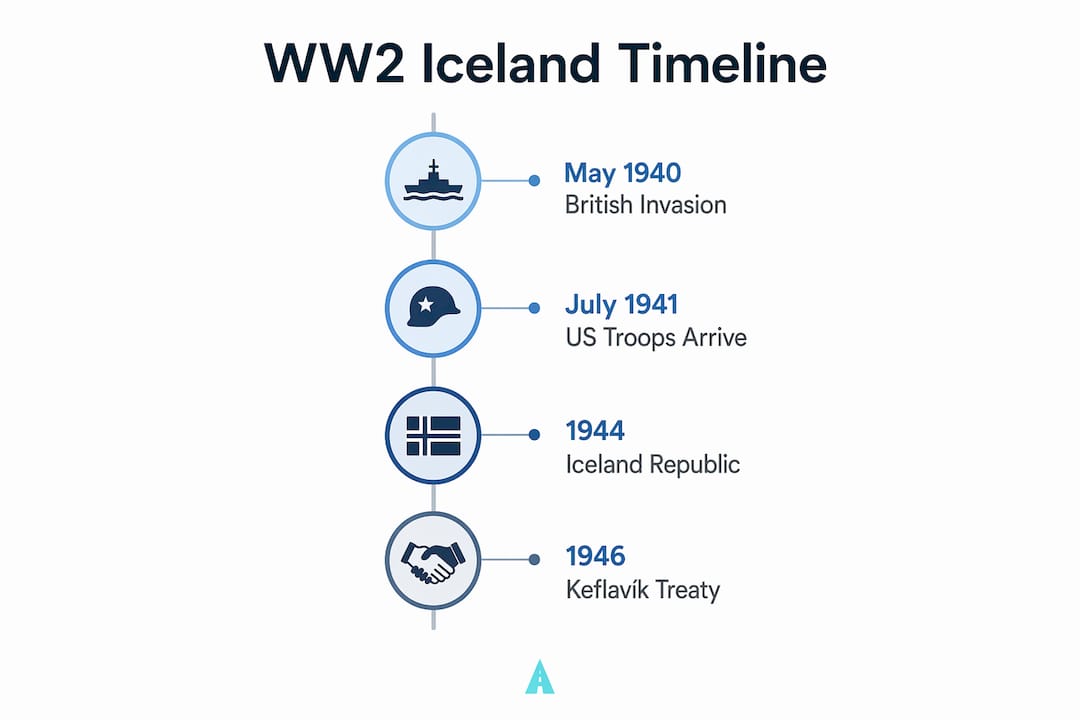
The occupation of Iceland during World War II passed through three distinct phases, each involving different Allied nations and a growing military footprint that reshaped the island physically and socially.
- British phase (May 1940 to July 1941): Royal Marines were followed by larger British Army units. By the summer of 1940, tens of thousands of British troops were stationed across Iceland, building roads, airfields, radar stations, and harbor facilities.
- Canadian reinforcement (1940 to 1941): Canadian forces arrived to support the British garrison, contributing engineering expertise and manpower to the rapid construction of military infrastructure across the island.
- American takeover (July 1941 onward): US forces replaced British troops in July 1941, months before Pearl Harbor formally brought America into the war. This was a calculated move. Britain needed its troops elsewhere, and the US was already providing material support to the Allies under the Lend-Lease Act.
The scale of the Allied presence relative to Iceland's population was extraordinary. At peak occupation, Allied forces reached nearly 25% of Iceland's total population. That ratio is comparable to having a foreign military force of 80 million stationed in the modern United States. The social and logistical pressure on Icelandic communities was immense.
| Period | Primary Force | Key Development |
|---|---|---|
| May 1940 | British Royal Marines | Initial landing at Reykjavík, 746 troops |
| Summer 1940 | British Army + Canadian forces | Airfields, roads, and radar stations built |
| July 1941 | US Army (pre-Pearl Harbor) | American forces take over garrison duties |
| 1944 | Reduced Allied presence | Iceland declares republic under occupation |
| Post-1945 | US forces (Keflavík base) | Defense agreement formalizes long-term presence |
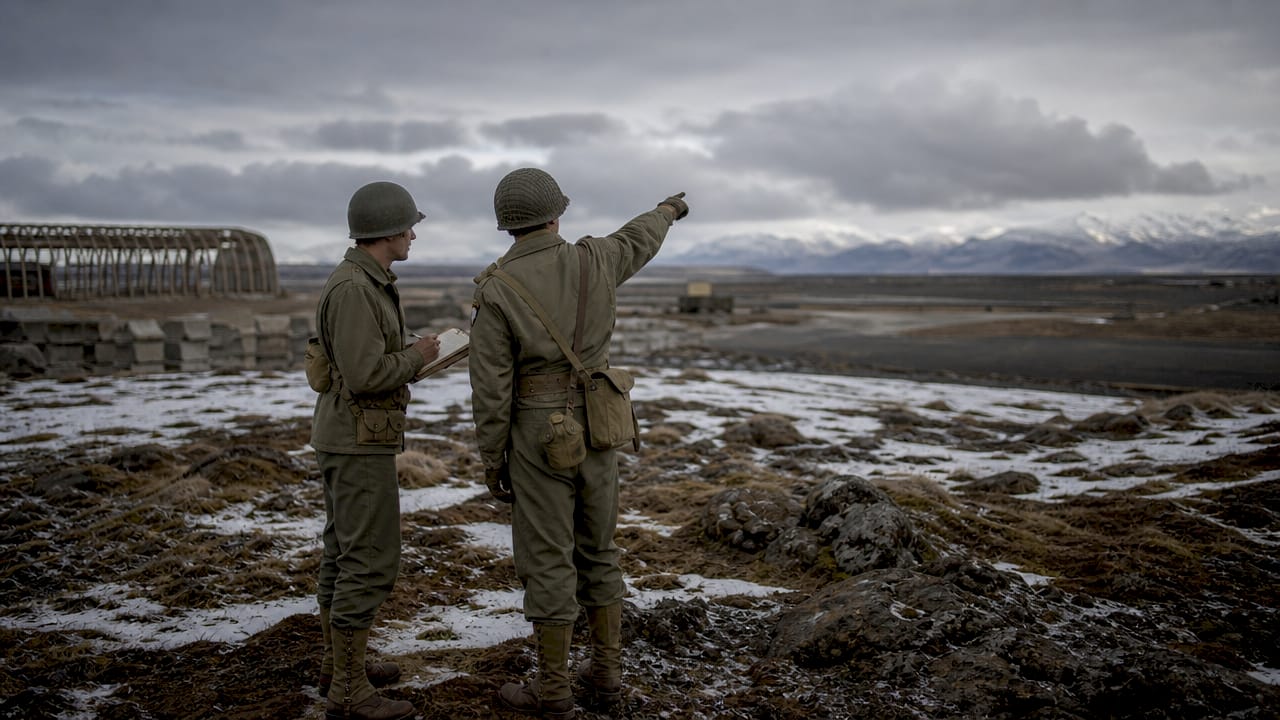
The military infrastructure built during this period was transformative. Keflavík Airport, which today serves as Iceland's main international gateway, originated as a US military airfield constructed during the occupation. Roads connecting Reykjavík to remote parts of the island were built or improved to support troop movements. These were not temporary installations. They became the physical foundation of modern Iceland.
Icelanders themselves played a supporting role throughout the occupation. Local workers were employed in construction, logistics, and services. The Icelandic government maintained its administrative functions and continued to govern domestic affairs, even as foreign troops occupied the land.
What were the social and economic impacts of WW2 on Iceland?
The social transformation triggered by the Iceland occupation WW2 was as significant as any military development. Icelanders use the phrase blessað stríðið, meaning the "Blessed War," to describe a conflict that brought economic modernization on a scale the country could never have achieved independently in the same timeframe. That nickname tells you something important: the war's economic legacy was genuinely positive for many Icelanders, even as its human costs were real.
The economic benefits were direct and substantial:
- Allied investment funded roads, airports, and harbor facilities that Iceland lacked the capital to build on its own
- Full employment replaced widespread poverty, as thousands of Icelanders found work supporting the occupation forces
- Foreign currency flowed into the economy through wages, contracts, and trade
- The infrastructure boom laid the foundation for Iceland's rapid post-war development from one of Europe's poorest nations to one of its wealthiest
The human cost was real, however. Approximately 230 Icelanders died from war-related causes including German U-boat attacks, aerial strikes, and naval mines. Iceland's fishing fleet operated in some of the most dangerous waters in the North Atlantic, and German submarines did not distinguish between military and civilian vessels.
Pro Tip: The social history of the occupation is often more surprising than the military history. If you plan to visit Iceland and want to understand the human side of this period, check out these Iceland travel tips before you go to make the most of your time at historical sites.
The social friction created by occupation was captured in the Icelandic term Ástandið, meaning "the Situation." This phrase referred specifically to the relationships that developed between Icelandic women and foreign soldiers. These relationships produced mixed-heritage children, challenged traditional social norms, and generated significant public debate. The presence of tens of thousands of young foreign men in a small, tightly knit society created cultural tensions that Icelanders openly discussed and debated throughout the war years. The occupation's deep knowledge reveals that it caused lasting shifts in Icelandic gender relations and contributed to a generation of mixed-heritage families whose descendants are part of Icelandic society today.
How did WW2 shape Iceland's political independence?
World War II accelerated Iceland's path to full independence in ways that would have taken decades under normal circumstances. The occupation fundamentally changed Iceland's political trajectory by severing its practical ties to Denmark at the precise moment when independence sentiment was already growing.
When Germany occupied Denmark in April 1940, communication between Copenhagen and Reykjavík effectively collapsed. Iceland's government began operating with full autonomy out of necessity. The Althing, Iceland's parliament, took over functions previously shared with the Danish crown and demonstrated that Iceland could govern itself without Danish oversight.
| Status | Before WW2 | During/After WW2 |
|---|---|---|
| Political relationship | Union with Denmark under shared monarch | Severed by German occupation of Denmark |
| Military defense | None (no standing army) | Provided by Allied forces |
| Economic development | One of Europe's poorest nations | Rapid modernization via Allied investment |
| International recognition | Dependent territory | Recognized sovereign republic from 1944 |
Iceland declared a republic on June 17, 1944, while Allied troops were still stationed on the island. The timing was deliberate. Icelandic leaders recognized that the wartime context gave them maximum leverage and minimum Danish resistance. Denmark, still under German occupation, was in no position to object. The republic was declared with Allied knowledge and tacit approval.
The post-war period extended foreign military presence rather than ending it. The Keflavík Agreement of 1946 formalized a continued US military presence at Keflavík, which persisted until 2006. Iceland joined NATO in 1949 as a founding member despite having no military of its own, a unique arrangement that reflected the island's continued strategic value in the early Cold War.
What WW2 sites can you visit in Iceland today?
Iceland preserves a surprising number of physical reminders from the World War II occupation, and visiting them gives you a tangible connection to the events described above. The War and Peace Museum in Hvalfjarðarvegur is the most dedicated WWII institution in the country, housing artifacts, vehicles, and documents from the occupation period.
Key sites worth visiting include:
- Hvalfjörður fjord: This deep fjord served as a major Allied naval anchorage and convoy assembly point. Ruins of military installations remain visible along the shoreline, and the area saw significant wartime activity involving both British and American naval forces.
- Öskjuhlíð hill, Reykjavík: The distinctive Perlan building now sits atop this hill, but during the war it was the site of Allied fuel storage tanks and military observation posts. The hill offered commanding views over Reykjavík harbor.
- Fossvogur Cemetery: This Reykjavík cemetery contains the graves of Allied soldiers who died in Iceland during the occupation, including British, Canadian, and American servicemen. It is a quiet and moving site.
- Keflavík and the Reykjanes Peninsula: The former US military base at Keflavík, now part of Keflavík International Airport, retains buildings and infrastructure from the American occupation era. The Reykjanes Peninsula has several abandoned military structures accessible to visitors.
- Icelandic Wartime Museum: Smaller regional museums and collections around the country hold photographs, personal accounts, and equipment from the occupation years, offering local perspectives on the broader conflict.
These sites matter not just as tourist attractions but as physical evidence of how thoroughly the occupation reshaped Iceland's geography and infrastructure.
Key takeaways
Iceland's WW2 experience proves that a small neutral nation can become a decisive factor in a global conflict when geography and timing align.
| Point | Details |
|---|---|
| Operation Fork's scale | Just 746 Royal Marines seized Iceland on May 10, 1940, without firing a shot. |
| Strategic value | Churchill called Iceland a pistol pointed at the North Atlantic, controlling vital Allied supply routes. |
| Occupation scale | Allied forces at peak reached nearly 25% of Iceland's total population, creating intense social pressure. |
| Economic transformation | Allied infrastructure investment laid the foundation for Iceland's rise from one of Europe's poorest to wealthiest nations. |
| Political acceleration | The occupation severed ties with Denmark and enabled Iceland to declare a republic in June 1944. |
Iceland's WW2 legacy deserves more attention than it gets
By Sergiu
Most WW2 narratives focus on the Eastern Front, the Pacific, or the beaches of Normandy. Iceland barely gets a footnote, and that is a genuine gap in how we understand the war. The North Atlantic was not a secondary theater. It was the supply line that kept Britain alive and the corridor through which American material support flowed to Europe. Iceland sat at the center of that corridor.
What strikes me most about Iceland's wartime experience is the complexity of it. This was not a simple story of heroic resistance or tragic defeat. It was a story of a small nation losing sovereignty it had not yet fully claimed, gaining economic development it desperately needed, and emerging from the war as an independent republic with a modern infrastructure. The Icelanders who called it the "Blessed War" were not being cynical. They were being honest about a genuinely ambiguous experience.
The social dimension, particularly Ástandið and the cultural disruption caused by tens of thousands of foreign soldiers living among a population of fewer than 120,000 people, is the part of this history that most visitors never encounter. It deserves serious attention. The occupation changed Icelandic society at a personal and family level in ways that military histories rarely capture.
If you have any interest in WW2 history and you are visiting Iceland, do not skip the sites. Hvalfjörður and the Fossvogur Cemetery are not heavily touristed. You will often have them to yourself. That quiet is part of what makes them powerful.
— Sergiu
Explore Iceland's WW2 history with Easytransfer
Iceland's wartime sites are spread across the island, from Reykjavík's Öskjuhlíð hill to the remote shores of Hvalfjörður fjord. Getting between them efficiently makes a real difference to how much you can see in a day.
Easytransfer offers private transfers across Iceland that take you directly to the locations you want to visit, on your schedule, with no shared buses or fixed departure times. Vehicles include Mercedes models and Tesla electric cars, with free WiFi onboard and fixed pricing with no hidden fees. Whether you are traveling solo or with a group of up to 49 passengers, Easytransfer covers the whole island. Get a quote by entering your preferred pickup and drop-off locations, and a sales agent will respond within 24 hours. Cancellations are free up to 24 hours before departure.
FAQ
Why did Britain invade Iceland in 1940?
Britain invaded Iceland on May 10, 1940, through Operation Fork to prevent Germany from occupying the island and using it as a base to attack North Atlantic shipping lanes. The initial landing force of 746 Royal Marines secured Reykjavík without resistance.
Did Iceland fight in World War II?
Iceland did not fight in WW2. The country had no standing army and maintained an official position of neutrality throughout the conflict, though it was occupied first by British and then by American forces from 1940 onward.
When did the US take over Iceland's occupation?
American forces arrived in July 1941 to replace British troops, several months before the US formally entered the war following the attack on Pearl Harbor in December 1941.
How did WW2 affect Iceland's independence?
Germany's occupation of Denmark in 1940 severed Iceland's administrative ties to Copenhagen, accelerating independence. Iceland declared a republic on June 17, 1944, while Allied forces were still stationed on the island.
What is the best WW2 site to visit in Iceland?
The War and Peace Museum in Hvalfjarðarvegur is the most dedicated WW2 institution in Iceland. Hvalfjörður fjord and Fossvogur Cemetery in Reykjavík are also significant sites that preserve the physical and human memory of the occupation years.