

TL;DR:
- Effective group transfer coordination in Iceland relies on early planning, accurate logistics data, and real-time communication. Organizers should verify group size, luggage, and special needs before booking, using flight tracking and messaging tools to ensure smooth arrivals and departures. Building precise schedules with buffers and designated meeting points minimizes delays and enhances overall trip reliability.
Coordinating group transfers is defined as the process of planning, scheduling, and managing transportation for multiple passengers to move together reliably, on time, and without confusion. In Iceland, this means handling everything from Keflavík Airport pickups to multi-stop tours across Reykjavík, Blue Lagoon, and Sky Lagoon. Get it right and your group arrives relaxed. Get it wrong and you spend the first hour of your trip chasing down passengers in a terminal. This guide covers the exact steps for planning group transportation, selecting vehicles, building schedules, and managing real-time communication so nothing falls through the cracks.
How to coordinate group transfers: prerequisites and tools
Before you book a single vehicle, you need a clear picture of your group's logistics. The four pieces of information you must collect upfront are group size, total luggage volume, any special needs (wheelchair access, child seats, oversized gear), and the exact arrival or departure times for every traveler. Missing any one of these details forces last-minute changes that cost time and money.
Digital tools that actually move the needle:
- Flight tracking apps (FlightAware, FlightRadar24): flight tracking integration allows dynamic schedule updates when flights are delayed, so your driver adjusts pickup timing automatically rather than waiting blind at the terminal.
- Group messaging platforms (WhatsApp groups, SMS broadcasts): these give you a single channel to push real-time updates to every traveler at once.
- Booking platforms with confirmed vehicle capacity: always verify seat count AND luggage space when booking, because passenger numbers alone don't account for the bags and gear your group is carrying.
- Scheduling spreadsheets or apps (Google Sheets, Trello): a shared document visible to coordinators, drivers, and venue contacts removes ambiguity about who goes where and when.
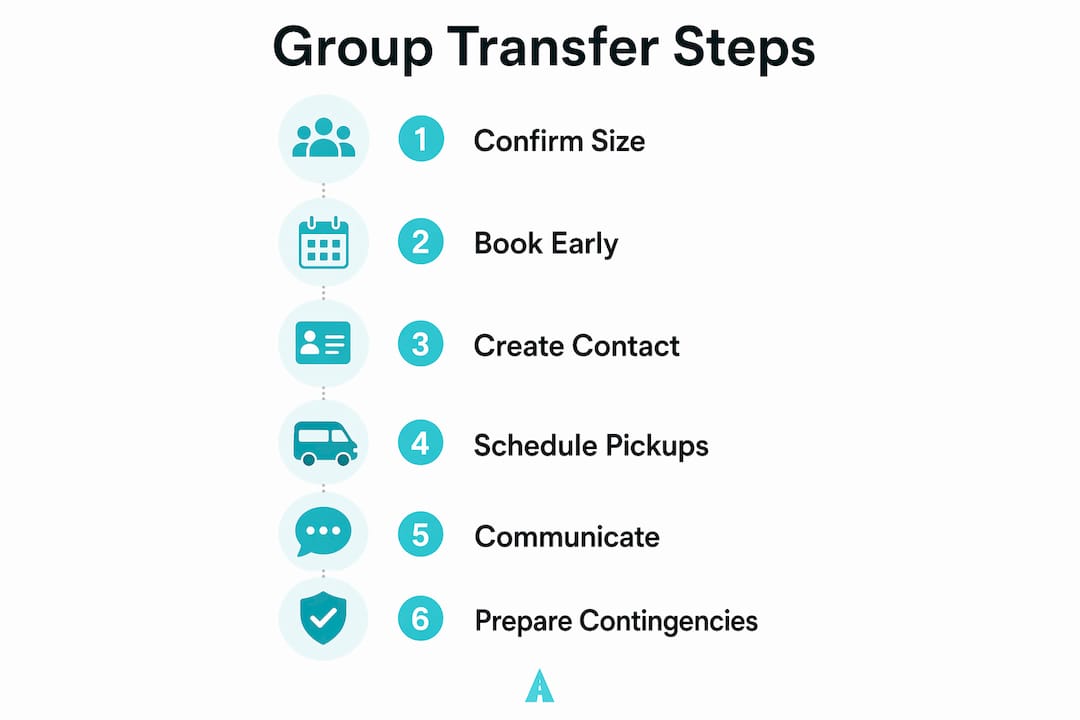
Early booking is not optional for groups in Iceland. During peak summer season, vehicles accommodating 15 or more passengers fill up weeks in advance. Confirm vehicle capacities in writing at the time of booking, not the day before travel.
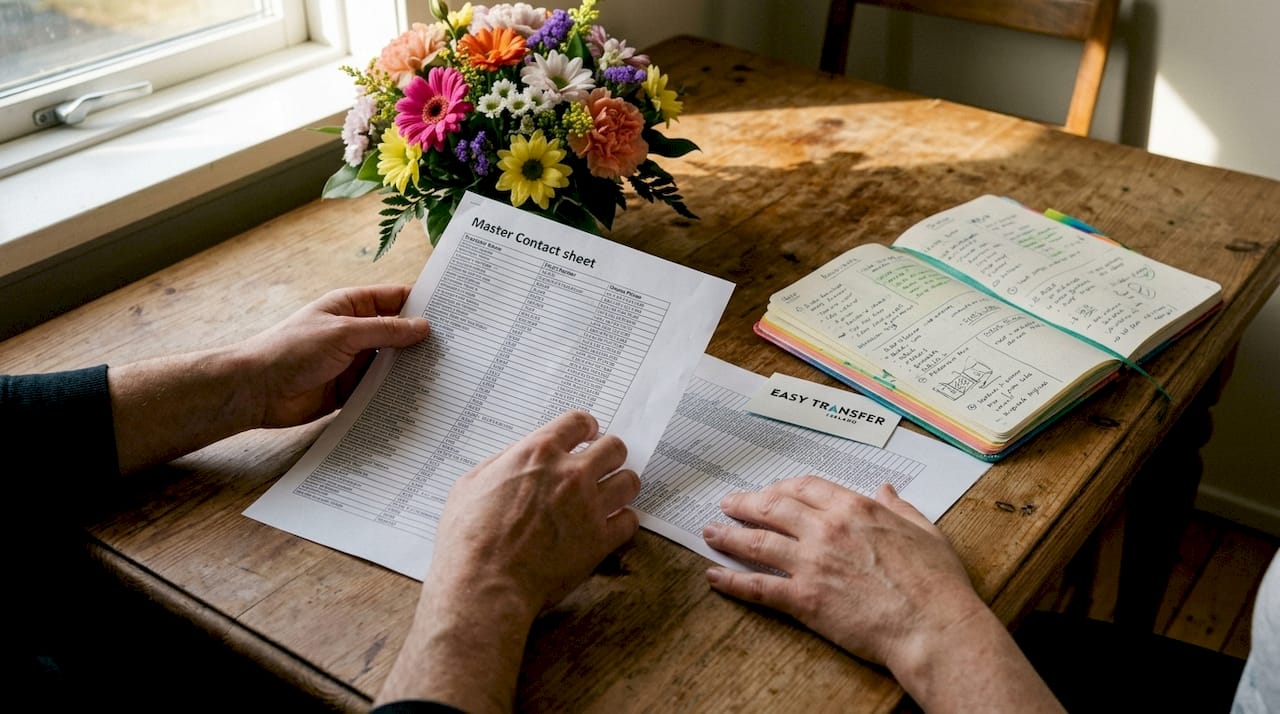
Pro Tip: Build a single master contact sheet listing every traveler's name, flight number, arrival time, and phone number. Share it with your driver and your backup coordinator before departure day.
| Preparation step | Why it matters |
|---|---|
| Confirm group size and luggage | Prevents vehicle under-booking and last-minute upgrades |
| Collect all flight numbers | Enables real-time tracking and dynamic schedule adjustments |
| Verify vehicle seat and cargo capacity | Avoids splitting groups due to space shortfalls |
| Set up a group messaging channel | Keeps all travelers informed with one message |
| Book early and confirm in writing | Secures availability during Iceland's high-demand travel season |
How to design an effective group pickup schedule
A well-built schedule is the difference between a group that boards on time and one that stands around a terminal for 45 minutes. The core principle is simple: group passengers with similar arrival or departure times together to minimize vehicle trips and wait times. Grouping by arrival time is the single most effective way to reduce the number of vehicles you need and cut total transfer costs.
Steps to build a realistic group transfer schedule:
- List every traveler's flight time. Sort arrivals into windows no wider than 60 minutes. Anyone landing within the same hour can share a vehicle.
- Add a 30 to 45 minute buffer for airport pickups. Professional transfer services build these windows into every airport leg to absorb delays at customs, baggage claim, and passport control.
- Add 15 to 20 minute buffers for non-airport transfer legs. Point-to-point transfers between hotels, venues, or attractions need shorter but still real buffers.
- Assign exact meeting points. Never use vague instructions like "meet at arrivals." Specify exact landmarks such as "Column 4, Level 1, Keflavík Airport arrivals hall, next to the information desk."
- Plan staggered departures for multi-venue events. For conferences, weddings, or multi-day tours, staggered departure times keep vehicles moving efficiently and prevent bottlenecks at a single pickup point.
- Build a visual schedule table. A simple table showing vehicle, passengers, pickup time, and drop-off location gives every stakeholder a single reference point.
Pro Tip: Send a pre-departure message to all travelers 30 minutes before each pickup. Group text reminders before departure cut last-minute confusion and reduce group anxiety significantly.
| Vehicle | Passengers | Pickup time | Pickup location | Drop-off |
|---|---|---|---|---|
| Van A | Group 1 (8 pax) | 14:30 | Keflavík Airport, Column 4 | Reykjavík hotel |
| Van B | Group 2 (6 pax) | 16:00 | Keflavík Airport, Column 4 | Blue Lagoon |
| Minibus C | Group 3 (14 pax) | 18:15 | Keflavík Airport, Column 4 | Reykjavík hotel |
What vehicle options work best for different group sizes?
Vehicle selection is where many group coordinators make their most expensive mistake. They book based on passenger count alone and arrive to find no room for luggage. The right vehicle matches your headcount, your bags, and your comfort expectations.
Vehicle types and their best-fit scenarios:
- Minivans (6 to 8 passengers): ideal for small family groups or corporate teams with moderate luggage. Mercedes V-Class and similar models offer comfort without the bulk of a larger vehicle.
- Minibuses (10 to 16 passengers): the workhorse of group transfers. Suited for tour groups, wedding parties, and corporate retreats moving between Reykjavík and attraction sites.
- Coaches (up to 49 passengers): best for large conference groups or multi-day tour operators. Coaches require pre-planned routes because not all Icelandic roads accommodate full-size coaches.
- Electric vehicles (Tesla Model X, Tesla Model Y): growing in availability in Iceland and well-suited for eco-conscious groups on shorter routes like Reykjavík to Sky Lagoon.
Private transfers beat shared shuttles for groups on almost every measure. Shared shuttles require multiple stops, add 30 to 60 minutes to transfer times, and offer no flexibility if a flight is delayed. Professional drivers who know Icelandic roads and conditions deliver faster, more predictable transfers. This matters especially in winter, when Route 41 between Keflavík and Reykjavík can be affected by wind and ice.
For groups planning accommodation alongside transfers, coordinating with your lodging provider early helps align arrival times with check-in windows. The group accommodation workflow at Fox Hostel in South Iceland is a practical example of how hospitality providers can sync with transport coordinators to reduce arrival-day friction.
You should also check whether your provider offers airport transfer tips specific to large groups, since Iceland's tourism patterns in 2026 mean higher demand and tighter vehicle availability during June through August.
How to manage communication and contingencies on transfer day
Transportation is often the first and last impression your group has of an event or trip. Planners who prepare backup vehicles and clear decision-making chains manage delays far better than those who improvise on the day. This is not a nice-to-have. It is the core of effective group transfer management.
Communication structure that works:
- Assign a primary coordinator with a fully charged phone, responsible for all contact with drivers and the booking provider.
- Assign a backup coordinator who mirrors the primary's information and takes over if the primary loses connectivity. A primary and backup coordinator with charged phones and a single communication channel is the standard used by professional event planners.
- Use one group messaging channel for all traveler updates. Splitting communication across email, WhatsApp, and SMS creates gaps where people miss critical information.
- Share driver contact details with all travelers before departure day, not on the morning of travel.
- Use physical signage at pickup points. A printed sign with your group name or event logo at the meeting point removes all ambiguity for travelers who are tired, jet-lagged, or unfamiliar with the terminal.
Contingency protocols to set in advance:
- Define a delay threshold. If a flight is delayed by more than 60 minutes, what happens? Does the vehicle wait, or does a backup vehicle cover a later window?
- Identify a fallback meeting point in case the primary location is inaccessible.
- Confirm that your transfer provider offers flexible backup plans with alternate vehicles, because a single-vehicle failure without a backup can strand your entire group.
Pro Tip: Ask your transfer provider whether they assign a dedicated contact person to your booking. Professional providers often assign a project manager to handle communication between coordinators, drivers, and venues, which removes you from the middle of every logistical decision.
Key takeaways
Coordinating group transfers in Iceland requires early preparation, precise scheduling with built-in buffers, the right vehicle for your group's actual size and luggage, and a clear communication chain from booking to drop-off.
| Point | Details |
|---|---|
| Collect complete group data first | Gather flight numbers, luggage volume, and special needs before booking any vehicle. |
| Build buffer time into every leg | Use 30 to 45 minutes for airport pickups and 15 to 20 minutes for all other transfer legs. |
| Match vehicle to passengers and bags | Passenger count alone does not determine the right vehicle. Verify cargo space at booking. |
| Assign primary and backup coordinators | Two coordinators with shared information prevent single points of failure on transfer day. |
| Specify exact meeting points | Vague instructions like "arrivals" cause delays. Use terminal, level, and landmark details. |
What I've learned from coordinating group transfers in Iceland
Most group transfer problems I've seen don't come from bad luck. They come from treating transportation as the last item on the planning list instead of one of the first. By the time a group of 20 people lands at Keflavík at 11 PM after a transatlantic flight, the window for fixing a logistics mistake is essentially zero.
The detail that surprises most first-time group coordinators is how much Iceland's geography concentrates transfer pressure onto a single corridor: the 50-kilometer stretch between Keflavík Airport and Reykjavík. Almost every international group passes through it. That means vehicle availability, driver familiarity with the route, and real-time flight tracking are not premium features. They are baseline requirements.
I've also seen coordinators underestimate the value of exact meeting points. Telling 15 people to "meet at arrivals" at Keflavík creates a 15-person search party. A sign at Column 4, Level 1, next to the information desk takes two minutes to organize and saves 20 minutes of chaos. That detail, repeated across every transfer leg, is what separates a smooth trip from a stressful one.
The other thing I'd push back on is the assumption that shared shuttles save money for groups. They rarely do once you account for the extra time, the inflexibility when flights are delayed, and the frustration of stopping at four hotels before yours. A private transfer for a group of 10 often costs the same per person as a shared shuttle, with none of the downsides. Run the numbers before you default to shared.
Finally, don't skip the group airport coordination guide step of confirming your provider's flight tracking capability. A provider who monitors your flight and adjusts pickup timing automatically is worth far more than one who shows up at the scheduled time regardless of what the flight board says.
— Sergiu
Plan your Iceland group transfer with Easytransfer
Easytransfer handles group transfers across Iceland with a fleet that scales from private minivans to coaches accommodating up to 49 passengers. Every booking includes flight tracking, fixed pricing with no hidden fees, and 24/7 support so your coordinator is never managing logistics alone. Drivers know Icelandic routes and conditions, which matters on the Keflavík corridor in winter and during peak summer demand. Whether you're organizing an airport pickup for a corporate retreat, a family reunion, or a multi-day tour, Easytransfer's private transfer services are built for exactly this kind of planning. Get a quote by entering your pickup and drop-off locations, and a sales agent will respond within 24 hours.
FAQ
How far in advance should I book group transfers in Iceland?
Book at least four to six weeks ahead during Iceland's peak season (June through August), when vehicles for groups of 10 or more fill quickly. For winter travel, two to three weeks is generally sufficient, though earlier is always better for large coaches.
What buffer time should I use for airport group pickups?
Professional group transfer services use 30 to 45 minute buffers for airport pickups to account for customs, baggage claim, and passport control delays. For transfers between hotels or attractions, 15 to 20 minutes is the standard buffer.
Should I choose a private transfer or a shared shuttle for my group?
Private transfers are the better choice for groups of six or more. Shared shuttles add multiple stops and 30 to 60 minutes of travel time, and they offer no flexibility when flights are delayed. Private transfers cost a comparable per-person rate for larger groups with significantly better reliability.
How do I handle a flight delay during a group transfer?
Assign a primary coordinator to monitor all flight numbers using a tracking app like FlightAware. Confirm with your provider in advance that they track flights and adjust pickup times automatically. Have a flexible backup plan with alternate vehicle options ready if the delay exceeds your agreed threshold.
What is the best way to communicate pickup details to a large group?
Create a WhatsApp group or SMS broadcast list before travel day and send the exact meeting point, driver name, vehicle description, and pickup time at least 24 hours in advance. Send a second reminder 30 minutes before each scheduled pickup to keep everyone on track.