

Many travelers assume flight tracking guarantees perfect pickup timing at airports, but reality is more nuanced. This technology dramatically improves airport transfer reliability by monitoring real-time flight data and adjusting pickups dynamically. For Iceland visitors facing weather delays at Keflavík Airport, understanding how flight tracking reduces wait times helps set realistic expectations. This guide explains the technology, benefits, limitations, and why choosing tracking-enabled transfers makes your Iceland arrival smoother.
Table of Contents
- How flight tracking enhances airport transfers in Iceland
- The technology behind flight tracking and data sources
- Challenges and nuances of flight tracking in airport transfers
Key takeaways
| Point | Details |
|---|---|
| Wait time reduction | Flight tracking cuts passenger wait times by monitoring live arrival data and adjusting pickup schedules automatically. |
| Multiple data sources | Combining APIs, ADS-B, and radar data improves accuracy and prevents service disruptions from single-source failures. |
| Predictive analytics | Advanced systems anticipate delays using historical patterns and weather data to optimize driver dispatch. |
| Technology limitations | Unexpected events like severe weather or gate changes can still affect timing despite tracking capabilities. |
| Provider selection | Choosing services with integrated multi-source tracking ensures more reliable airport transfers in Iceland. |
How flight tracking enhances airport transfers in Iceland
Flight tracking transforms airport transfers by connecting drivers to live aviation data streams. When your flight from London or New York approaches Iceland, the system monitors its progress through multiple checkpoints. Drivers receive instant alerts about delays or early arrivals, eliminating guesswork about pickup timing.
This technology addresses a critical pain point for international visitors. You land exhausted after a transatlantic journey, expecting your driver to be waiting. Without tracking, delays mean either rushed drivers or passengers standing in the cold Icelandic terminal. Flight tracking systems reduce wait times by up to 90 minutes by synchronizing pickups with actual arrivals.
Iceland's weather makes this especially valuable. Winter storms frequently delay flights into Keflavík Airport, sometimes by hours. Traditional scheduled pickups fail here because drivers arrive on time but passengers don't. Real-time monitoring solves this by adjusting driver dispatch based on current conditions rather than original schedules.

The system works through continuous data feeds from airlines and aviation authorities. When your flight encounters headwinds over the Atlantic, the updated ETA instantly reaches the dispatch center. Drivers receive new instructions without passengers needing to make frantic phone calls from 35,000 feet.
Pro Tip: Always verify that your Keflavik airport to Reykjavik transfer provider offers live flight tracking before booking to avoid arrival surprises.
Key benefits of flight tracking include:
- Automatic schedule adjustments for delayed or early flights
- Reduced passenger stress through proactive monitoring
- Eliminated idle waiting time for drivers
- Lower operational costs passed to travelers
- Better resource allocation during peak travel periods
Real-time flight data integration reduces wait times by up to 60% and minimizes missed pickups, making it essential for quality airport transfer services.
The technology behind flight tracking and data sources
Flight tracking systems combine multiple technologies to achieve accuracy. The foundation includes ADS-B (Automatic Dependent Surveillance-Broadcast), radar data, airline operational systems, and third-party APIs. Each source provides different information types that together create comprehensive tracking.
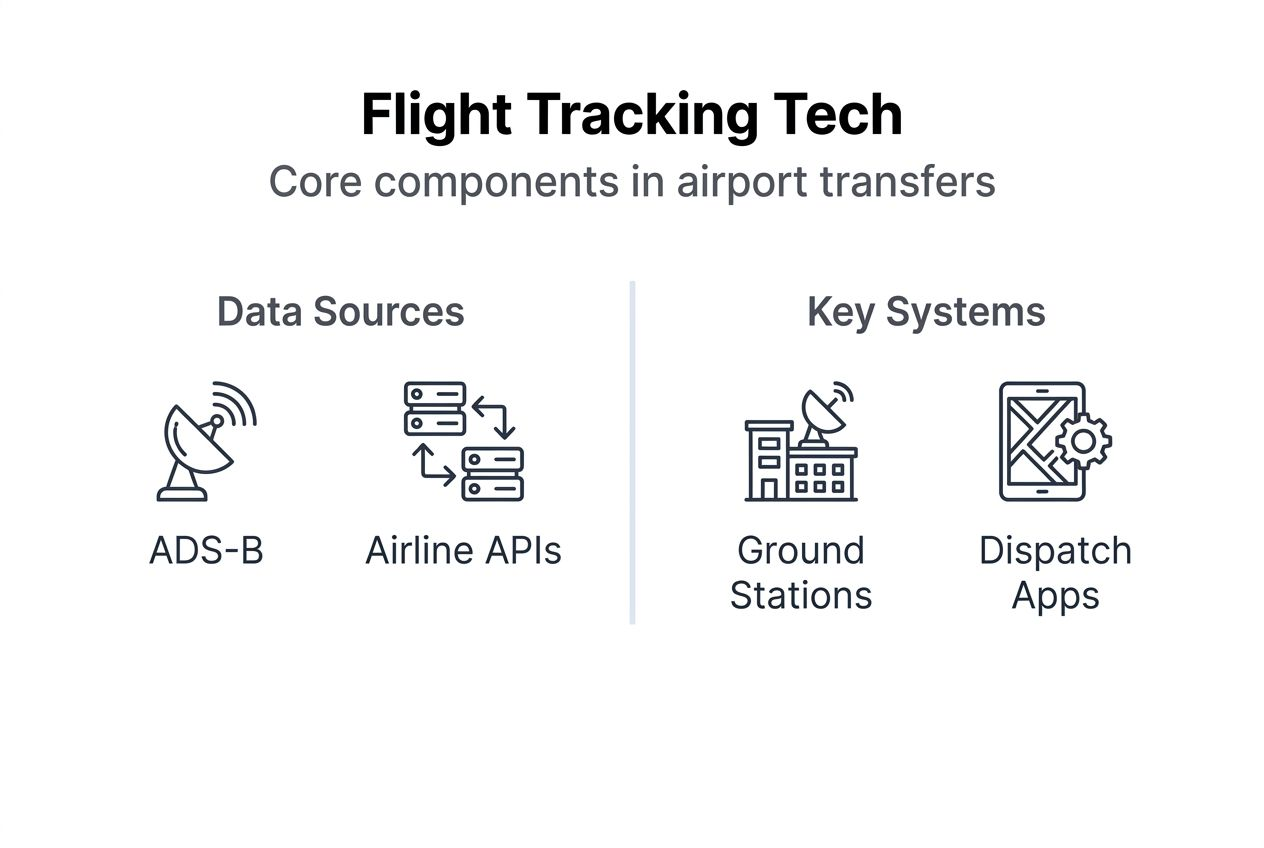
ADS-B transmitters on aircraft broadcast position, altitude, and velocity data every second. Ground stations receive these signals and feed them into tracking networks. Radar provides backup coverage where ADS-B gaps exist, particularly over remote oceanic routes to Iceland. Airlines contribute schedule changes, gate assignments, and baggage claim information through their systems.
Flight tracking integrates APIs from providers like FlightAware and FlightStats, combining multiple data streams to improve accuracy by up to 40%. This redundancy matters because single sources occasionally fail or provide outdated information. Using parallel data streams catches discrepancies and maintains service continuity.
The tracking process follows these steps:
- Data acquisition from ADS-B, radar, airline systems, and airport feeds
- Processing algorithms calculate estimated arrival times using current position, speed, and weather
- Dispatch systems receive automatic updates triggering driver notifications and schedule adjustments
- Continuous monitoring refines predictions as flights progress toward landing
- Final confirmation upon actual touchdown and taxi to gate completion
Using multiple flight data providers improves reliability by 30%, essential for preventing service disruptions when individual data sources experience outages or delays.
| Technology Type | Data Provided | Update Frequency | Coverage Area |
|---|---|---|---|
| ADS-B | Position, altitude, speed | Every 1-2 seconds | Global (with gaps) |
| Radar | Position, altitude | Every 4-12 seconds | Regional |
| Airline APIs | Schedule changes, gates | Real-time | Airline-specific |
| Airport Systems | Landing times, baggage | Real-time | Airport-specific |
API integrations push processed data to transfer company dispatch platforms. When your flight's ETA changes, the system recalculates optimal driver departure times from garage or previous jobs. This ensures drivers arrive at Keflavík Airport within minutes of your actual baggage claim exit rather than relying on scheduled arrival times.
Pro Tip: Airport transfer providers using multiple API sources offer significantly better reliability than those relying on single data feeds.
The sophistication level varies dramatically between providers. Basic systems check flight status once or twice before pickup. Advanced platforms monitor continuously from takeoff through landing, incorporating weather forecasts and historical delay patterns into their predictions.
Challenges and nuances of flight tracking in airport transfers
Despite technological advances, flight tracking has real limitations travelers should understand. The system provides estimates and monitoring capabilities but cannot control external factors affecting your arrival experience. Setting realistic expectations prevents disappointment when edge cases occur.
Weather-related delays cause approximately 40% of ETA deviations, particularly relevant for Iceland where conditions change rapidly. Your flight might circle Keflavík Airport for 30 minutes waiting for visibility to improve. Tracking shows the aircraft circling but cannot predict exactly when clearance occurs. Drivers adjust based on best available information, but precision suffers during severe weather events.
Gate changes present another challenge. You land on time, but ground operations assign a different gate last minute. Tracking systems show landing time accurately but may lag on gate assignments. Drivers sometimes wait at the wrong terminal exit until passengers call with updated locations. Communication protocols minimize this issue but don't eliminate it entirely.
Common flight tracking challenges include:
- Sudden weather system arrivals affecting landing patterns
- Last-minute gate or terminal changes at busy airports
- Aircraft diversions to alternate airports requiring backup plans
- Initial ETA estimates based on optimistic flight plans versus realistic conditions
- Data feed delays or outages from individual provider systems
- Baggage handling delays not reflected in landing time data
A common misconception is that flight tracking guarantees perfect accuracy, but contingency planning remains essential for quality service. Professional transfer companies maintain communication channels and flexible dispatch to handle surprises.