
TL;DR:
- Diamond Beach is Iceland's most visually striking black sand shore, where icebergs from Jökulsárlón wash ashore and create a stunning contrast. Visitors should prioritize safety by staying alert to sneaker waves and avoiding ice climbing while capturing photos during sunrise or sunset for the best light. It is accessible by a 5 to 6-hour drive from Reykjavík, and combining it with nearby attractions enhances the experience.
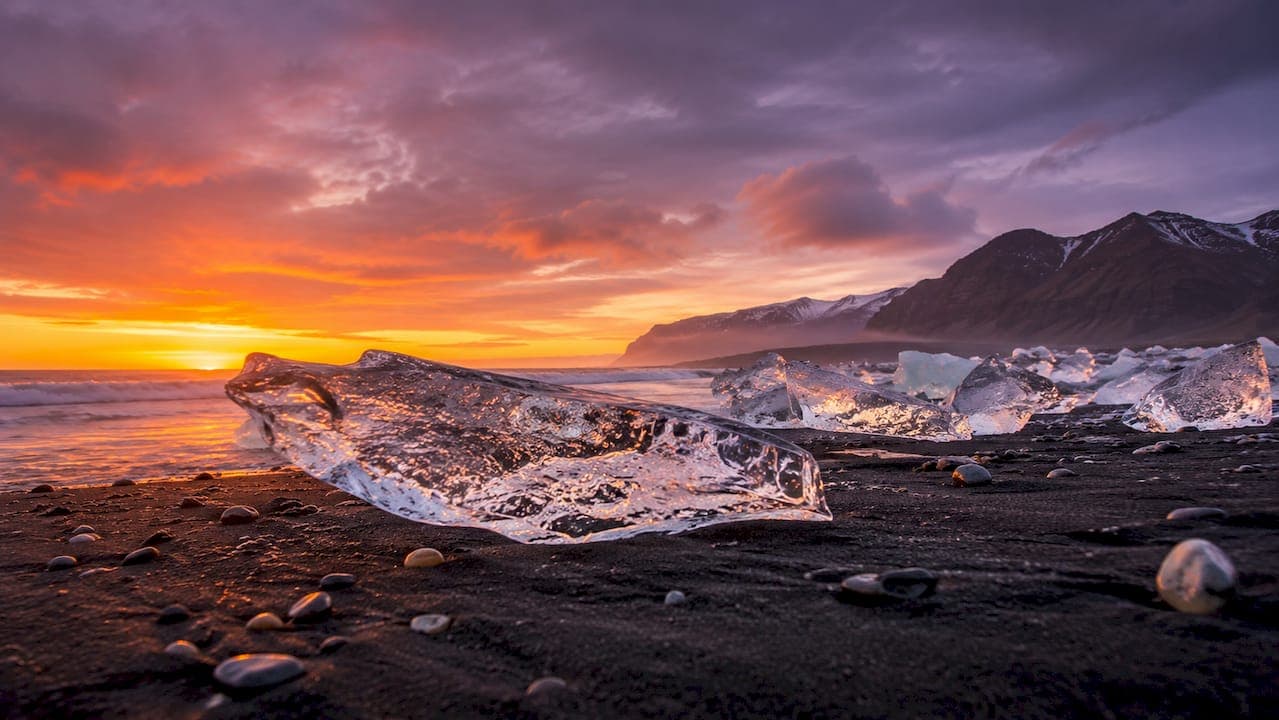
Diamond Beach is Iceland's most visually striking black sand shore, where translucent glacial icebergs from Jökulsárlón Glacier Lagoon wash ashore and glitter against jet-black volcanic sand. Located on Iceland's South Coast near Vatnajökull National Park, this beach sits directly across Route 1 from Jökulsárlón, making it one of the country's most accessible natural wonders. The contrast between sparkling ice and dark sand creates photography opportunities found almost nowhere else on Earth. Whether you're planning your first Iceland trip or returning for another South Coast adventure, this guide covers everything you need to know.
1. What makes Diamond Beach unlike any other beach in Iceland
Diamond Beach forms part of the Breiðamerkursandur outwash plain, a vast black sand flat fed by meltwater from the Breiðamerkurjökull glacier, an outlet of the massive Vatnajökull ice cap. The icebergs you see on the beach are not decorations. They are real glacier fragments that calved into Jökulsárlón Lagoon, drifted to the ocean, and were pushed back ashore by Atlantic tides.
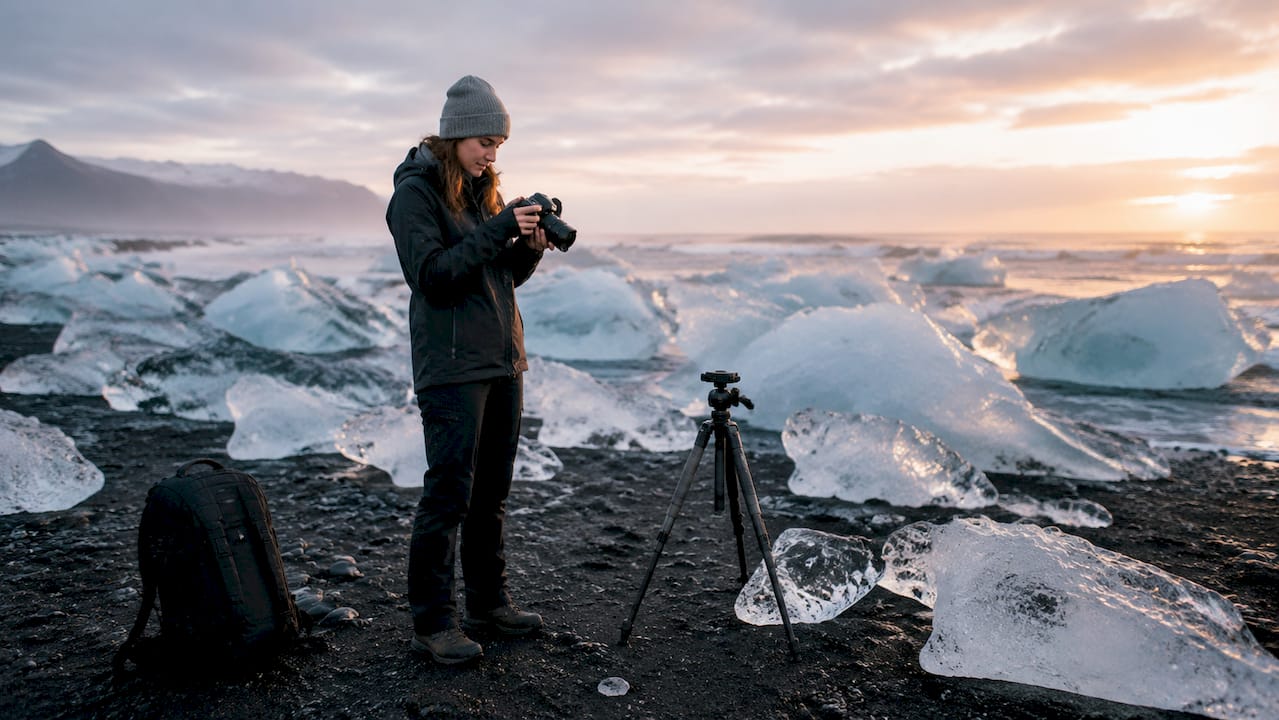
What sets this beach apart from every other black sand beach in Iceland is the constant presence of ice. The "diamonds" range from fist-sized chunks to blocks larger than a car. Their colors shift between milky white, deep blue, and crystal clear depending on the age and density of the ice.
Key features that make this beach unique:
- Glacial origin: Every ice piece traces back to Breiðamerkurjökull, one of Iceland's most active outlet glaciers.
- Daily change: Tides bring new ice in and carry old pieces out, so the beach looks different every single day.
- Rare visual contrast: Jet-black volcanic sand paired with translucent ice is a combination found in very few places worldwide.
- No two visits alike: Ice shapes and sizes vary daily, driven by glacier calving rates, ocean currents, and weather.
2. Best photography spots at Diamond Beach
Timing is the single biggest factor in Diamond Beach photography. Sunrise and sunset produce the softest light, which enhances the blue tones inside the ice and creates warm reflections on the wet sand. Midday sun flattens the scene and washes out the ice's natural color depth.
The wet sand left behind as waves recede is your best compositional tool. Waiting for tide pauses creates mirror-like reflections beneath ice formations, turning a good shot into a great one. Treat the beach as a micro-location that changes minute to minute.
Practical photography tips for your visit:
- Use a tripod: Long exposures during golden hour capture both the ice and its reflection cleanly.
- Watch the waves: Position yourself where receding water creates wet sand pools around ice chunks.
- Vary your angle: Get low to the sand to make small ice pieces look monumental against the sky.
- Shoot in RAW: Iceland's flat, overcast light rewards post-processing flexibility.
- Be patient: The best composition may appear after 20 minutes of waiting, not immediately on arrival.
Pro Tip: Arrive at least 30 minutes before sunrise. The pre-dawn blue hour gives the ice an electric glow that disappears once the sun clears the horizon.
3. How to get to Diamond Beach from Reykjavík
Diamond Beach sits roughly 370–380 km from Reykjavík, about a 5–6 hour drive along Route 1, Iceland's Ring Road. The drive itself is scenic, passing Seljalandsfoss, Skógafoss, and the Eldhraun lava field before reaching the South Coast's glacier zone.
Visiting Diamond Beach is free, but parking costs around 1,000 ISK in 2026. The parking lot serves both the beach and Jökulsárlón Lagoon, so you can walk between both in minutes. No reservation is needed for beach access.
Key practical details for your visit:
- Drive time: 5–6 hours from Reykjavík; about 1 hour from Höfn heading west.
- Road: Route 1 (Ring Road) is paved and well-maintained, though winter driving requires a 4WD vehicle.
- Parking: Shared lot for beach and lagoon; fee applies, no entrance ticket needed.
- Visit duration: Most travelers spend 30 minutes to 1.5 hours on the beach alone, and 2–3 hours total when combining with Jökulsárlón.
- Best months: Winter (november through march) brings more ice on the beach; summer (june through august) offers easier driving and up to 24 hours of daylight.
- Safety: Sneaker waves reach farther inland than expected. Never turn your back to the ocean, and never climb the icebergs.
For travelers who prefer not to drive Iceland's long stretches alone, a private transfer to South Coast sites removes the stress of navigation and winter road conditions entirely.
4. Safety rules every visitor must follow
Safety at Diamond Beach is not optional. Icelandic sneaker waves are deceptive, arriving without warning and reaching well beyond the visible surf line. Several incidents have been documented at this beach specifically. The black sand makes wet and dry zones hard to distinguish at a glance.
The icebergs look solid but are not stable. Climbing them risks sudden collapse, and the ice surface is far more slippery than it appears. Wet volcanic sand around the ice is equally slick.
Follow these rules without exception:
- Face the ocean at all times. Never turn your back to incoming waves, even briefly.
- Stay back from the surf line. The safe zone is further inland than most visitors assume.
- Do not climb icebergs. They are unstable and the surface is dangerously slippery.
- Assign a wave watcher. During group photography sessions, one person should watch the sea while others shoot.
- Wear grip footwear. Rubber-soled boots with ankle support prevent slips on wet sand and ice.
5. Things to do near Diamond Beach
Jökulsárlón Glacier Lagoon is the obvious first companion stop, and it earns that status. Boat tours on the lagoon take you directly among the floating icebergs, showing you the full journey from glacier face to ocean shore. Amphibious boat tours and zodiac tours both operate seasonally, with zodiac options running from may through october.
Wildlife sightings add an unexpected dimension to the area. Seals regularly haul out on the lagoon's icebergs and swim near the beach. Orca sightings occur occasionally in the waters just offshore, particularly in late spring.
Other nearby attractions worth your time:
- Northern Lights viewing: Winter nights at Diamond Beach offer one of Iceland's best Northern Lights backdrops, with ice on the sand reflecting the aurora colors.
- Skaftafell Nature Reserve: Located about 50 km west, Skaftafell offers glacier hiking on Svínafellsjökull and the famous Svartifoss waterfall framed by basalt columns.
- Fjallsárlón Glacier Lagoon: A quieter alternative to Jökulsárlón, located about 10 km west, with fewer crowds and equally dramatic iceberg views.
- Glacier hiking tours: Several operators run guided ice walks from Skaftafell, suitable for beginners with no prior experience required.
Boat tours are ticketed separately from beach access, so budget extra time and money if you want the full lagoon experience. Combining Diamond Beach, Jökulsárlón, and Skaftafell in one day is achievable but requires an early start from Reykjavík or an overnight stay nearby.
Pro Tip: Book Jökulsárlón boat tours in advance during july and august. They sell out days ahead in peak season.
6. How Diamond Beach compares to other black sand beaches in Iceland
Diamond Beach differs from Reynisfjara in one defining way: glacial ice. Reynisfjara, near Vík, is famous for its dramatic basalt columns and powerful Atlantic surf, but there are no icebergs. The visual experience is completely different.
Here is a direct comparison of Iceland's top black sand beaches:
| Beach | Location | Key Feature | Best Season | Ice Present |
|---|---|---|---|---|
| Diamond Beach | Southeast Iceland | Glacial icebergs on black sand | Year-round | Yes |
| Reynisfjara | South Iceland, near Vík | Basalt columns, sea stacks | Year-round | No |
| Djúpalónssandur | Snæfellsnes Peninsula | Pebble beach, shipwreck remains | Summer | No |
| Stokksnes | Southeast Iceland | Mountain backdrop, dunes | Summer | No |
Diamond Beach wins on photographic uniqueness. Reynisfjara wins on dramatic wave energy and geological formations. If you only have time for one, Diamond Beach offers the rarer experience. If your itinerary allows, both are worth the stop since they sit on the same Ring Road route.
Key takeaways
Diamond Beach is Iceland's most photogenic black sand shore, and visiting it well requires timing, safety awareness, and pairing it with Jökulsárlón for the full experience.
| Point | Details |
|---|---|
| Glacial ice is the defining feature | Icebergs from Breiðamerkurjökull wash ashore daily, making every visit visually unique. |
| Timing determines photo quality | Sunrise and sunset produce the best light and ice reflections on wet sand. |
| Safety rules are non-negotiable | Sneaker waves and unstable ice require constant ocean awareness and no climbing. |
| Combine with Jökulsárlón | Budget 2–3 hours total for both sites; boat tours require separate tickets. |
| Access is straightforward | Free beach entry, around 1,000 ISK parking, and 5–6 hours from Reykjavík by car. |
What I've learned from visiting Diamond Beach more than once
The first time I visited Diamond Beach, I made the classic mistake: I arrived at noon, shot for 20 minutes, and left thinking I had seen it. I had not. The second visit, I arrived before sunrise and stayed through golden hour. The difference was not subtle. The ice turned shades of orange and pink I did not know were possible on a glacier fragment.
The crowd factor is real and underestimated. By 10 a.m. in summer, the beach fills with tour buses. The ice does not move for photos, but the people do. Early arrival is not just about light. It is about having the beach to yourself for the first hour.
The safety warnings are not exaggerated. I watched a wave reach a group of photographers who were standing what looked like a safe distance from the surf. Nobody was hurt, but it was close. The ocean at Diamond Beach does not behave like a calm shore. Treat it with the same respect you would give a glacier hike.
My honest recommendation: pair Diamond Beach with an overnight stay in the area rather than cramming it into a single long day from Reykjavík. The South Coast of Iceland rewards slow travel. Rushing through it to check a box means missing the moments that make it genuinely memorable.
— Sergiu
Getting to Diamond Beach without the driving stress
Planning a South Coast trip that includes Diamond Beach, Jökulsárlón, and Skaftafell is rewarding. Driving 370–380 km each way on your own, especially in winter conditions, adds real pressure to what should be an enjoyable day.
Easytransfer offers private transfers across Iceland, including custom South Coast routes that take you directly to Diamond Beach and nearby glacier sites. Vehicles include Mercedes models and Tesla electric cars, with free WiFi onboard and fixed pricing with no hidden fees. Flight tracking and 24/7 support mean your transfer adjusts to your schedule, not the other way around. Groups of up to 49 passengers are accommodated. To get a quote, simply submit your preferred pickup and drop-off locations, and a sales agent will respond within 24 hours.
FAQ
Where exactly is Diamond Beach in Iceland?
Diamond Beach sits on Iceland's South Coast, directly across Route 1 from Jökulsárlón Glacier Lagoon, roughly 370–380 km from Reykjavík.
Is Diamond Beach free to visit?
Beach access is free. Parking costs around 1,000 ISK in 2026, and Jökulsárlón boat tours are ticketed separately.
What is the best time of year to visit Diamond Beach?
Winter brings more ice on the sand, while summer offers easier driving and longer daylight. The beach is worth visiting year-round.
How long should I plan to spend at Diamond Beach?
Most travelers spend 30 minutes to 1.5 hours on the beach itself. Budget 2–3 hours total if you include a Jökulsárlón visit.
Is Diamond Beach safe for children and families?
The beach is accessible for families, but sneaker waves are a serious hazard. Keep children away from the surf line and never allow climbing on the icebergs.