
TL;DR:
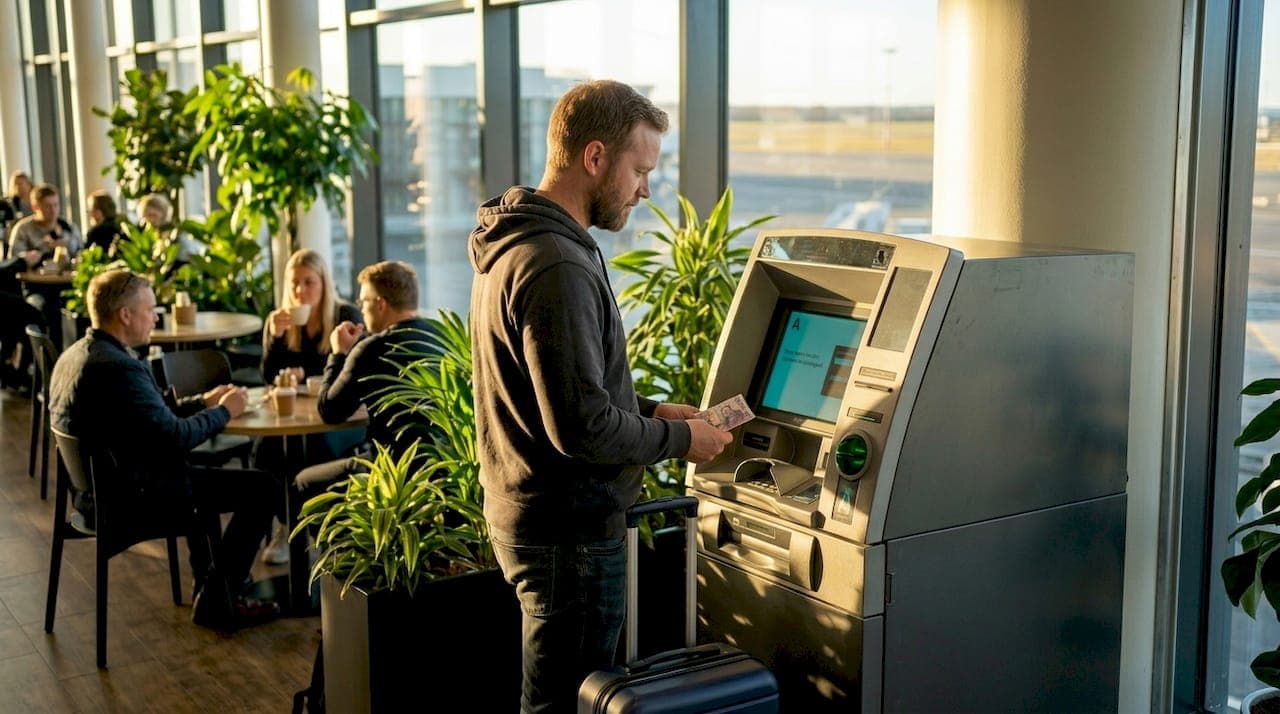
- Cashless transactions dominate in Iceland, but travelers still need ISK for rural vendors and small markets. ATMs from local banks offer the best exchange rates, and always declining Dynamic Currency Conversion can save you 3 to 8% on each transaction. Planning to withdraw ISK immediately at Keflavík Airport or Reykjavík ensures cost-effective and reliable access to local currency throughout your trip.
Currency exchange in Iceland centers entirely on the Icelandic króna (ISK), the country's only accepted currency, and the smartest way to get it is straight from an ATM. Iceland runs on card payments more than almost any country in the world, but you still need ISK for certain vendors, rural stops, and smaller markets. Whether you land at Keflavík Airport at midnight or stroll into downtown Reykjavík on a Sunday afternoon, knowing where and how to exchange money saves you real money. This guide covers every method, the fees to watch for, and the one trap that costs travelers far more than it should.
What is the Icelandic króna and how does currency exchange work?
The Icelandic króna (ISK) is Iceland's official currency and the only legal tender accepted for purchases nationwide. Its ISO code is ISK, and it circulates in banknote denominations of 500, 1,000, 2,000, 5,000, and 10,000 króna, plus coins in 1, 5, 10, 50, and 100 króna. Euros and U.S. dollars are not standard payment in Iceland. A handful of tourist-facing shops in central Reykjavík may accept them, but always at rates that favor the merchant, not you.
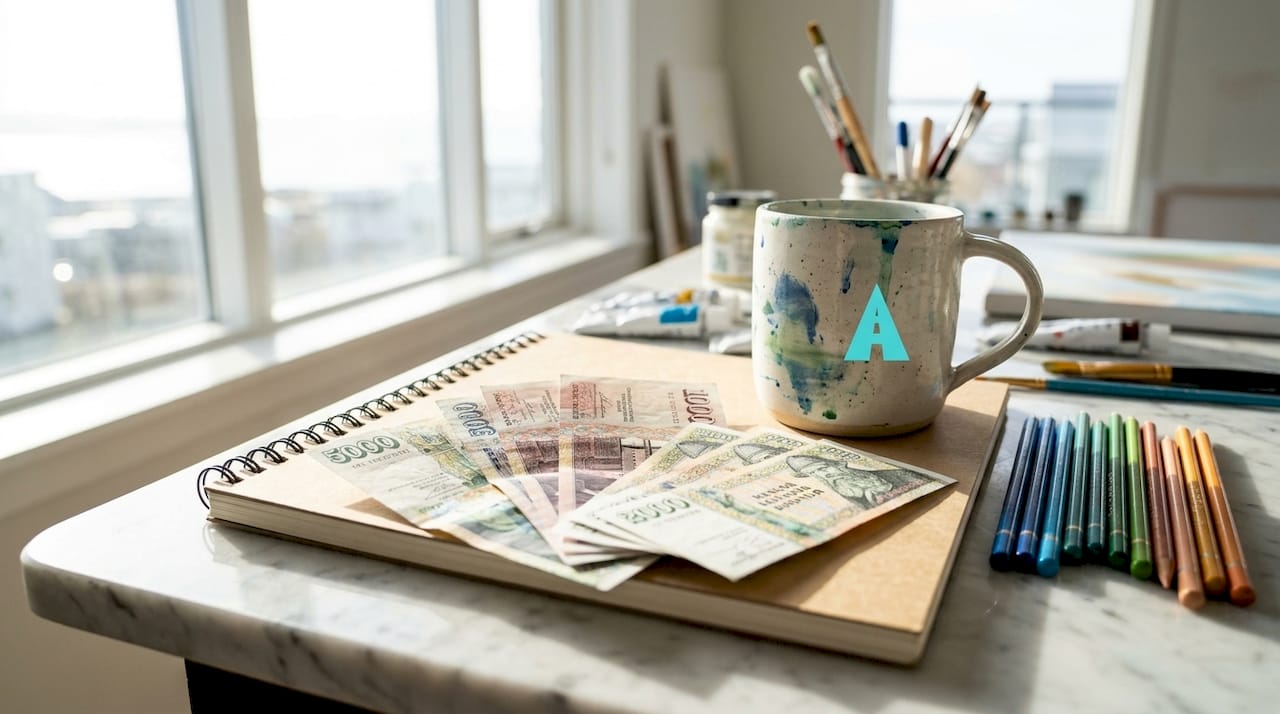
Exchange rates for ISK fluctuate daily against major currencies. Landsbankinn, one of Iceland's largest banks, publishes reference rates with a 15-minute delay. As a general reference, EUR trades around 143 to 144 ISK and USD around 122 to 123 ISK, though these figures shift constantly. Those published numbers are not the rates you will actually receive. Banks and exchange offices apply a spread, meaning the buy and sell rates differ, and fees layer on top of that.
For a realistic baseline before your trip, cross-reference Landsbankinn's published rates with the European Central Bank's reference rate. The ECB rate carries no spread and gives you a clean market midpoint. Any rate you are offered in person will be worse than that midpoint. Knowing the gap tells you whether a deal is reasonable or a rip-off.
| Currency pair | Approximate buy rate (ISK) | Approximate sell rate (ISK) | Best source |
|---|---|---|---|
| EUR / ISK | ~143.27 | ~144.38 | Landsbankinn, ATMs |
| USD / ISK | ~122.48 | ~123.43 | Landsbankinn, ATMs |
| GBP / ISK | Varies | Varies | ATMs recommended |
| CAD / ISK | Varies | Varies | ATMs recommended |
Rates are approximate references. Always check live rates before traveling.
How to get the best exchange rates in Iceland
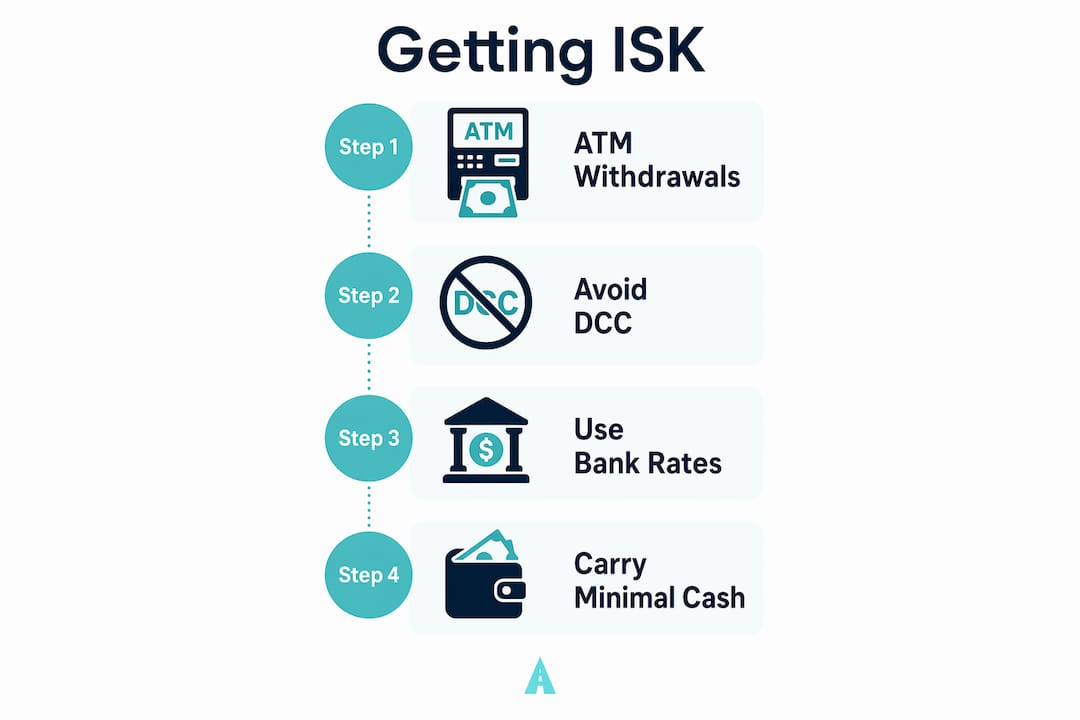
ATMs offer the most competitive exchange rates for visitors and are the preferred method for getting ISK. Your card issuer handles the conversion at or near the interbank rate, which beats anything an airport counter or hotel desk will quote you. ATMs from Arion Bank, Íslandsbanki, and Landsbankinn are widely available across Reykjavík and at Keflavík Airport.
Exchanging cash before you travel almost always produces worse rates than withdrawing ISK on arrival. Home banks and local exchange offices in your country price ISK as an exotic currency with thin demand, so their spreads are wide. The math rarely works in your favor.
Here is how the main options compare:
| Method | Rate quality | Fees | Availability | Best for |
|---|---|---|---|---|
| ATM (local Icelandic bank) | Excellent | Card issuer fee only | 24/7 at airports, cities | Most travelers |
| Icelandic bank branch | Good | Minimal | Weekdays, 9 AM to 4 PM | Large amounts |
| Airport exchange desk | Poor | High commission | Extended hours | Emergency only |
| Hotel exchange desk | Very poor | Very high | On-site | Avoid if possible |
| Pre-trip home exchange | Poor | Wide spread | Before departure | Not recommended |
Key points to keep in mind:
- Use a card with no foreign transaction fees. Cards from Charles Schwab, Wise, or Revolut typically charge zero or near-zero fees on ATM withdrawals abroad.
- Withdraw larger amounts less often. If your bank charges a flat fee per withdrawal, one larger withdrawal beats three smaller ones.
- Avoid hotel exchange desks entirely. The convenience markup is steep and rarely justified.
Pro Tip: Before leaving home, call your bank or check your card's fee schedule for international ATM withdrawals. Some cards reimburse ATM fees globally, which makes every withdrawal essentially free.
What is Dynamic Currency Conversion and why should you avoid it?
Dynamic Currency Conversion (DCC) is a service offered at ATMs and card terminals that lets you pay in your home currency instead of ISK. It sounds convenient. It is not. DCC surcharges add roughly 3 to 8% on top of the transaction, and that cost goes directly to the ATM operator or merchant, not to any service you benefit from.
The mechanics are straightforward. When you insert your card, the ATM detects your card's home currency and offers to show you the charge in dollars, euros, or pounds. If you accept, the ATM applies its own exchange rate, which is always worse than your bank's rate. DCC is a revenue strategy for operators, and travelers who accept it consistently pay more for the same transaction.
How to avoid DCC every time:
- Always select "Pay in ISK" or "local currency" when the ATM or terminal asks.
- Decline the conversion if the screen shows your home currency amount without asking. Look for a "decline" or "no" option.
- Read the screen carefully. DCC prompts are often worded to make accepting feel like the default choice.
- At card terminals in shops, the cashier may ask which currency you prefer. Always say ISK.
Selecting ISK at every payment point is the single most reliable way to let your own bank handle the conversion at a better rate. Your card issuer almost always offers a tighter spread than any DCC provider.
Pro Tip: If an ATM only shows your home currency and gives you no option to switch to ISK, cancel the transaction and find a different machine. Some older or privately operated ATMs default to DCC with no opt-out.
Where and when to exchange currency in Iceland
Planning when and where you access ISK matters more than most travelers expect. Here is a practical sequence to follow:
-
At Keflavík Airport on arrival. Airport ATMs operate 24 hours and dispense ISK immediately after landing. This is your best first stop, especially if you arrive in the evening or on a weekend. The exchange desks at the airport are open during extended hours but charge significantly higher rates. Use the ATM, not the desk.
-
In downtown Reykjavík. ATMs from Arion Bank and Íslandsbanki are located throughout the city center, including near Laugavegur shopping street and Austurvöllur square. These machines are reliable and well-maintained.
-
At Icelandic bank branches. Banks are open weekdays from 9 AM to 4 PM. If you need to exchange a large amount of foreign cash or handle a more complex transaction, a bank branch offers good rates and staff who speak English. Outside those hours, you are back to ATMs.
-
Before weekends and public holidays. Having a small ISK buffer before a weekend is smart. Bank counters close Friday afternoon and do not reopen until Monday. ATMs remain available, but if your card has issues, you want cash already in hand.
-
Outside Reykjavík. In rural areas and along the Ring Road, ATMs exist in most towns but are spaced far apart. Withdraw enough ISK before leaving the city to cover fuel, guesthouses, and food for at least two days.
One fact that surprises many visitors: Iceland is one of the most cashless societies in the world. Card payments are accepted at nearly every restaurant, gas station, guesthouse, and shop. You rarely need large amounts of ISK. A buffer of 5,000 to 10,000 ISK covers most incidental cash needs for a week-long trip. Check out these first-time visitor tips for a broader picture of what to expect on the ground.
Key takeaways
ATMs are the definitive best method for currency exchange in Iceland, offering competitive rates, 24/7 access, and full control over avoiding DCC fees.
| Point | Details |
|---|---|
| ISK is the only accepted currency | Euros and dollars are rarely accepted and always at poor rates. |
| ATMs beat all other exchange methods | Use Arion Bank or Íslandsbanki ATMs for the best available rates. |
| Always pay in ISK, never DCC | Declining Dynamic Currency Conversion saves 3 to 8% per transaction. |
| Withdraw before weekends and holidays | Bank branches close Friday afternoon; ATMs stay open but plan ahead. |
| Pre-trip cash exchange is not worth it | Home exchange offices price ISK poorly. Wait and withdraw on arrival. |
What I've learned about cash and currency after years of Iceland travel
From my experience helping travelers move around Iceland, the currency question comes up constantly, and the answer is almost always the same: trust your ATM card and always pick ISK on the screen. The travelers who run into trouble are usually the ones who exchanged a large amount of cash at home "just to be safe" and then spent the rest of the trip carrying more ISK than they needed, only to face poor buyback rates at the end.
Iceland's card infrastructure is genuinely impressive. I have seen travelers go an entire week without touching a single banknote. That said, I always recommend keeping a small ISK reserve for farmers' markets, roadside stands, and the occasional guesthouse in the Westfjords that still prefers cash. It is not about needing cash constantly. It is about not being caught without it in a specific moment.
The DCC trap is the one I see catch even experienced travelers. The ATM screen is designed to make accepting the conversion feel natural. Slow down, read the options, and pick ISK every single time. That one habit alone can save you a meaningful amount across a two-week trip.
If you are arriving on a late flight, use the Keflavík Airport ATM before you do anything else. Get your ISK, get your bearings, and then focus on getting to your accommodation. Pairing that with a pre-booked transfer means one less thing to figure out when you are tired and jet-lagged. For practical advice on planning the rest of your Iceland trip, the essential Iceland travel tips for 2026 are worth reading before you fly.
— Sergiu
Start your Iceland trip without the stress
Sorting out ISK at the airport ATM is straightforward. Getting from Keflavík Airport to Reykjavík, the Blue Lagoon, or Sky Lagoon at midnight after a long flight is a different kind of challenge. Easytransfer handles that part for you. With fixed pricing, flight tracking, and door-to-door service in premium vehicles including Mercedes and Tesla models, you know exactly what you are paying and exactly when your driver will be there. No surprises, no negotiating at the curb. Book your private transfer in Iceland in advance and arrive with one less thing to worry about.
FAQ
What currency is used in Iceland?
Iceland uses the Icelandic króna (ISK) as its only official currency. Euros and U.S. dollars are not standard payment and are rarely accepted outside a few tourist-facing shops in Reykjavík.
What is the best way to get ISK in Iceland?
Withdrawing ISK from ATMs is the best method, offering competitive rates and 24/7 access at Keflavík Airport and throughout Reykjavík. Pre-trip cash exchange at home consistently produces worse rates.
What is Dynamic Currency Conversion and should I avoid it?
Dynamic Currency Conversion (DCC) is an ATM or terminal option that charges you in your home currency instead of ISK. Always decline it. DCC adds 3 to 8% to your transaction cost and benefits the operator, not you.
Are there ATMs at Keflavík Airport?
Yes. Keflavík Airport ATMs operate 24 hours and dispense ISK, making them the ideal first stop for travelers arriving outside bank hours or on weekends.
Do I need a lot of cash in Iceland?
No. Iceland is one of the most cashless countries in the world, and card payments are accepted almost everywhere. A buffer of 5,000 to 10,000 ISK covers most incidental cash needs for a typical week-long visit.