
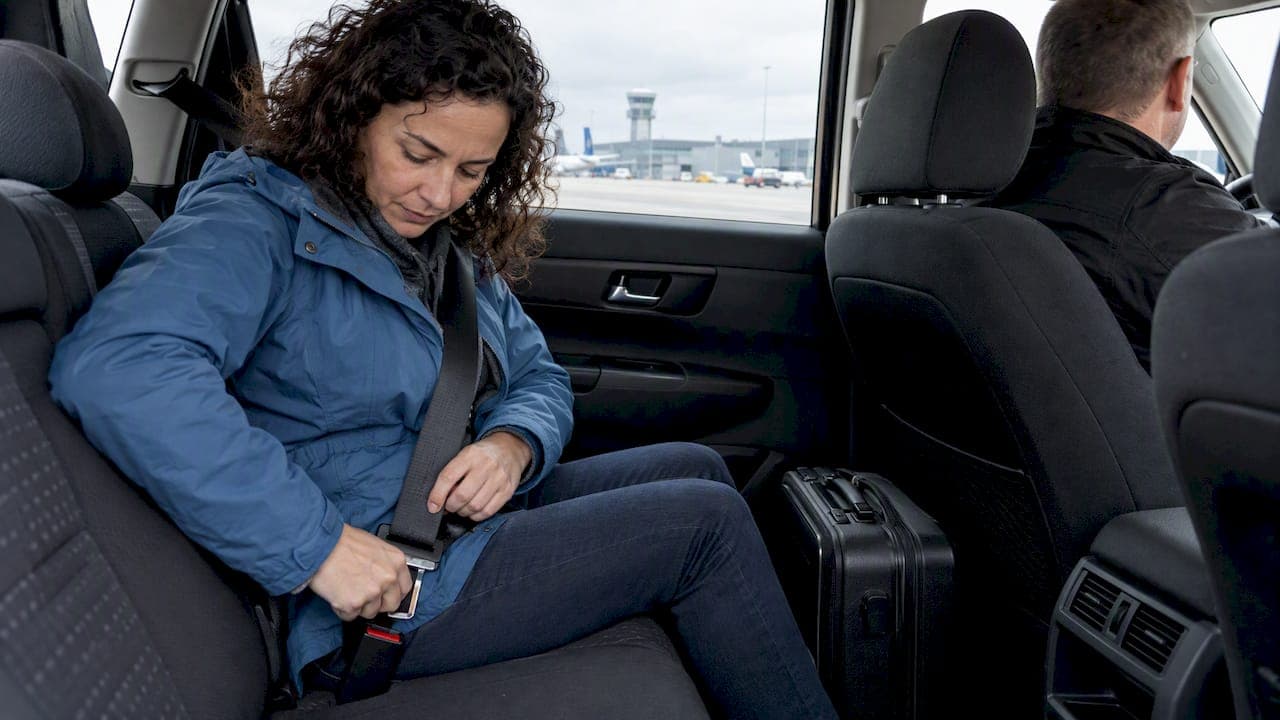
Airport transfers in Iceland are generally safe when you choose a licensed, identifiable operator or a pre-booked private transfer. The Icelandic Transport Authority (Icetra) sets the taxi licensing and consumer rules, so those rules are your yardstick. For a predictable, flight-tracked pickup, you can book a private transfer with us at EasyTransfer.is.
TL;DR:
- Before boarding, match the registration to the confirmation, check the roof light or windshield license sticker, and ask to see the driver’s permit if unsure.
- Get the fare or meter terms in writing, along with the driver’s name, registration, meeting point, flight tracking policy, and cancellation terms before travel.
- Check the IRCA app for weather, road conditions, and webcams; add buffer time, and rebook if roads are closed or impassable.
- Shared shuttles usually cost least per person but add stops, while metered taxis leave the total uncertain; private transfers confirm the fare and vehicle size ahead.
- Passenger insurance details and liability limits are not publicly listed, so ask the operator in writing what coverage applies and check your own travel policy.
Table of Contents
- What should you check before booking or at pickup?
- How do you verify a taxi or transfer operator in Iceland?
- How do weather and road conditions affect transfer safety?
- Shared shuttle, metered taxi or private transfer: which should you choose?
- What safety features should transfer vehicles have?
- What qualifications should a transfer driver have in Iceland?
- What safety protocols apply during the ride?
- How do you communicate and get help during a transfer?
- What insurance and liability should passengers know about?
- Why we recommend professional private transfers at Keflavík
- How we meet the checklist and how you book
- FAQ
- Sources
What should you check before booking or at pickup?
Irish travelers landing at Keflavík usually arrive tired, often with bags and sometimes late at night. A short checklist does most of the safety work for you. Icetra's rules about taxis give the framework, and the checks below follow it.
- Identification on the car. A metered taxi shows a roof light. A pre-agreed transfer displays a license sticker on the windshield. The station emblem sits low and centered on the front windshield, and the station number appears in the upper left of the rear windshield.
- Price type. Know whether you are paying a meter or a fixed price, and get the figure or the booking confirmation in writing before the car moves.
- Vehicle suitability. Check the passenger limit and luggage space. Seatbelts must work, and taxis must carry a fire extinguisher and a first aid kit. If you travel with children, ask about child restraints before you book, not at the curb.
- Booking details. You should have the driver's name, the vehicle registration, a local phone number, the flight-tracking policy and the cancellation terms.
We also keep a plain explainer on what a fixed price airport transfer is, which helps if you are weighing a meter against a quoted fare.
Pro Tip: Screenshot your booking confirmation and save the driver's phone number before you leave home, so you are not hunting for mobile signal in the arrivals hall.
Red flags are simple to spot. Walk away from unmarked cars, a driver who will not show a permit, no written receipt or confirmation, and anyone insisting on cash only with no invoice.
How do you verify a taxi or transfer operator in Iceland?
Verification starts before you fly. A legitimate pre-booked transfer gives you a confirmation number, a named meeting point, the driver's name and the vehicle registration. If any of those is missing, ask for it in writing.
Once you land, work through the same short sequence every time:
- Confirm the meeting point from your booking and go straight to it, rather than following anyone who approaches you.
- Look for the roof light on a metered taxi, or the license sticker on the windshield for a pre-agreed trip.
- Check the station emblem on the front windshield and the station number in the upper left of the rear windshield.
- Match the vehicle registration to your confirmation.
- If anything feels off, ask to see the driver's permit before you load your bags.
Icetra's guidance also points to a protection that works in your favor: electronic trip recording and retention of trip data are regulatory requirements. Operators that record trips leave a paper trail, which matters if you ever need to dispute a fare or report a problem.
Regulatory requirement: taxi operators must record trips electronically and retain the trip data, as set out in the Ísland.is taxi rules.
If you suspect a problem, photograph the license sticker, the vehicle registration and the driver's permit if it is shown. Those images give Icetra or the local police something concrete to work with. Icetra oversees taxi permits and passenger rights, so it is the right body to report to.
At Keflavík, stay at the arranged meeting point and avoid curb solicitors who offer a ride before you have confirmed anything. A calm, deliberate handover is the safest one. For arrival logistics in more detail, see our Keflavík to Reykjavík transfer guide. A partner guide on airport transfer arrival instructions also covers meet-point habits that apply at any airport.
How do weather and road conditions affect transfer safety?
Iceland's weather changes quickly, and so do its roads. The Icelandic Road and Coastal Administration publishes road-condition categories for the whole country, such as easily passable, difficult driving and impassable or closed. Those labels are tied to what kind of vehicle should be on the road. Its detailed definitions explain what storm conditions, blizzard and snowfall mean in practice and when only specialized vehicles should proceed.
Here is how to plan around it:
- Check road conditions and weather in the free IRCA traveler app before you leave, as it shows conditions, weather and webcams.
- Add buffer time to any onward leg, especially in winter.
- Ask your operator whether a 4x4 is advised for your route and dates.
- Keep 112 saved in your phone. It is Iceland's emergency number for police, ambulance and rescue, confirmed on the road administration's contact page.
- If roads are closed or impassable, rebook rather than push on.
Pro Tip: Choose an operator that tracks your flight and monitors conditions. A delayed landing or a sudden storm is far easier to handle when someone is already watching for it.
If a storm hits around your arrival, our guide for Irish travelers on using Isavia alerts and private transfers at Keflavík explains when to rebook.
Shared shuttle, metered taxi or private transfer: which should you choose?
There are several common ways to get from Keflavík to the city, and each suits a different traveler. Our overview of airport transfer types in Iceland goes deeper, but the tradeoffs are easy to summarize:
- Shared shuttle: usually the lowest cost per person, but you share the schedule with others, and stops for other passengers add time.
- Street metered taxi: flexible and available on arrival, but the final price depends on the meter and the route, so you do not know the total up front.
- Hotel transfer: convenient when your hotel arranges it, though vehicle size and flight-delay handling vary.
- Pre-booked private transfer: a set meeting point, a written price, a guaranteed vehicle size and an operator who watches your flight.
The private option is the one that lines up best with the checklist above. A written price answers the price-type check. A named driver and registration answer the identification check. Flight tracking removes the worry about a delayed landing leaving you with nobody at the curb.
Groups, families with children and late-night arrivals benefit most. With several people and heavy bags, a guaranteed vehicle size beats hoping a taxi fits everyone. With small children, you can confirm restraints ahead of time. At midnight, you do not want to improvise.
Whatever you book, demand these confirmations: vehicle type, passenger limit, pick-up instructions, driver contact and the cancellation policy.
What safety features should transfer vehicles have?
Icetra's rules set a baseline you can check with your own eyes. A taxi must be registered in the national vehicle registry, and it must carry a fire extinguisher and a first aid kit. Seatbelts are required, and the official driving safety guidance adds that headlights must be on at all times and seatbelts worn.

You can verify most of this quickly at pickup. Look for the identification marks described earlier, buckle up before the car moves, and glance at the cabin. If a driver cannot show basic safety equipment, treat that as a signal to decline the ride.
Beyond the legal minimum, think about fit for your trip. A vehicle should seat your whole party with luggage secured, not stacked where it can shift. Winter travel favors vehicles suited to the season, and the road administration ties vehicle suitability to its road-condition categories.
Our fleet includes Mercedes models and electric cars such as Tesla, chosen for passenger comfort and safety, and we can match the vehicle size to your group. Tell us your passenger count and luggage when you request a quote, and we will confirm the right vehicle in writing. That written confirmation is the same evidence you would want from any operator.
What qualifications should a transfer driver have in Iceland?
Driver oversight sits with Icetra, which administers professional drivers and taxi permits alongside road traffic safety and passenger rights. Its own site covers driver education and examination processes, so permits are not informal paperwork.
For you, the practical point is simple. A licensed taxi operates under a permit, and the permit holder must follow what the rules call good business practices. If you are unsure about a driver, ask to see the permit. A legitimate professional will not mind, and a refusal is itself a red flag.
We stick to what we can state plainly about our own team: our drivers are professional, licensed and English-speaking. Beyond that, public information on background checks is limited, so if this matters to you, ask any operator, including us, how drivers are vetted. A reputable company answers directly, and you can ask in writing when you request your quote.
Local knowledge matters as much as the paperwork. Iceland's road and weather conditions can change quickly, and an experienced local driver reads them better than a visitor can. Familiarity with the airport routes, the meeting points and the seasonal hazards is what you are paying for, and it is one reason professional transfers tend to feel calmer than improvised ones.
What safety protocols apply during the ride?
Good passenger safety is mostly routine, and you can set the tone yourself. Seatbelts go on before the car moves. Luggage should be stowed so it cannot slide forward. If you travel with children, confirm restraints before you book rather than at the curb.
Keep your confirmation handy and check the driver's name and vehicle registration against it before you get in. During the ride, a driver should follow the posted conditions and adjust to weather. If a route looks unsafe because of a storm or a closure, a good operator tells you and proposes a plan instead of pressing on.
On COVID-19 measures, we have no current Iceland-specific protocol to point you to, and travel health rules change, so check the official guidance for your travel dates before you fly. For everyday hygiene, a clean vehicle and the option to open a window are reasonable things to expect and to ask for.
On comfort, small details also reduce stress after a long flight. Free WiFi on board lets you message your hotel or family, and a driver who tracks your flight means you do not need to call anyone if you land late. A calm handover starts with an operator who already knows your arrival time. If something about the ride bothers you, say so early, because a professional driver would rather fix it than lose your trust.
How do you communicate and get help during a transfer?
Communication is the quiet safety feature. Before you fly, make sure you hold the driver's name, a local phone number and the meeting point. Save the operator's support number so you can reach someone if your flight lands early or late.
We offer customer support and flight tracking, so a delay changes the pickup time instead of leaving you stranded. Our booking confirmation is instant.
For emergencies, Iceland's number for police, ambulance and rescue is 112, and the road administration lists it on its contact page. Save it before you land. For road-condition questions, the same page lists phone numbers, and the IRCA app puts conditions, weather and webcams in your pocket.
If something goes wrong during a ride, stay calm, note the vehicle registration, take photographs where you safely can and contact the operator first. Serious problems go to the police, and Icetra handles complaints about taxi permits and passenger rights. Having evidence in hand makes any report quicker to resolve. Keep your phone charged and your data or roaming sorted before departure, because a dead phone removes most of the safety net.
What insurance and liability should passengers know about?
This is the area where public detail is thinnest, so treat it as a question to ask rather than an assumption to make. Icetra supervises taxi permits and passenger rights, and the permit framework is the starting point for what a licensed operator owes you. We do not have a published liability figure to quote, so we will not guess at one.
What you can do is ask, and you should. Before you book any transfer, ask the operator in writing what insurance covers passengers in the vehicle and who to contact if there is an incident. A professional operator can answer plainly, and a vague reply tells you something too.
Also look at your own cover. Many Irish travelers already hold travel insurance through a card, a policy or an annual plan, and it is worth checking whether it covers injury or delay during ground transport. Keep your policy number and the insurer's emergency line with your confirmation.
If a problem occurs, the evidence you collected earlier, the written price, the vehicle registration and the trip record, supports any claim. Electronic trip recording is a regulatory requirement under the taxi rules, so a licensed operator should be able to show that a trip took place.
Why we recommend professional private transfers at Keflavík
Our view comes from watching how arrivals tend to go wrong. People land late, the bags come out slowly, the weather turns, and a tired traveler makes a rushed decision at the curb. A managed private transfer takes most of those decisions off the table before you board your flight at home.
The regulatory side backs the idea. Icetra's rules require identification marks, good business practices and electronic trip recording, and each of those is easier to verify when the booking is in writing and the driver is named in advance. A fixed price removes the meter question, and flight tracking removes the delay question. Our reasoning is laid out in more detail in our piece on why professional airport transfers matter.
I would go further. The popular instinct is to treat the cheapest option as the smart one, and for a shared shuttle on a sunny afternoon that can be fine. But the cost of a bad arrival is hours, stress and sometimes safety, and those do not show up on the fare. What matters is whether you can verify the operator, the price and the pickup before the car moves.
— Sergiu
How we meet the checklist and how you book
Everything above comes down to verifiable details, and we built our service around them. Here is how our offer maps to your checks:
- Written confirmation: instant booking confirmation with the pickup details.
- Fixed pricing: a set price with no hidden fees, so the price-type check is settled in advance.
- Flight tracking: your driver follows your flight and adjusts to delays.
- Vehicle suitability: premium vehicles including Mercedes and Tesla, with group capacity suited to your party.
- Support: customer support and free WiFi on board.
- Flexible cancellation: check the cancellation terms for details on refunds.
We cover Keflavík to Reykjavík, plus Blue Lagoon and Sky Lagoon transfers and private day tours. A Keflavík transfer starts from 45 USD per traveler, and Blue Lagoon and Sky Lagoon transfers start from 36 USD per traveler, as listed on our private transfers page. For anywhere else in Iceland, request a quote with your pickup and drop-off points, and one of our sales agents will reply.
Have your flight number, passenger count and luggage details ready. If something goes wrong, you can reach us directly, with your confirmation as the record of what we agreed. To lock in a transfer that ticks every box above, book your private transfer now.
FAQ
How long is the transfer from Iceland airport to Reykjavík?
Our Keflavík to Reykjavík guide covers current timings. Weather and road conditions can lengthen the trip, so allow a buffer, especially in winter.
Are cabs expensive in Iceland?
Metered taxis are priced by the meter, so the total depends on the route and the traffic. A fixed-price private transfer gives you the figure in writing before you travel, which makes budgeting simpler. Our current rates are on our private transfers page.
How can I check that a taxi is legitimate?
Look for the roof light on a metered taxi or the license sticker on the windshield for a pre-agreed trip. The station emblem and station number should also be visible, as described in the Ísland.is taxi rules. If you are unsure, ask to see the driver's permit.
What should I do if road conditions are bad when I land?
Check the IRCA app or the road administration's condition map, and contact your operator. If roads are closed or impassable, rebook rather than travel.
Sources
- Rules about taxis | Ísland.is
- Road conditions in Iceland | Road conditions in Iceland | The Icelandic Road and Coastal Administration