
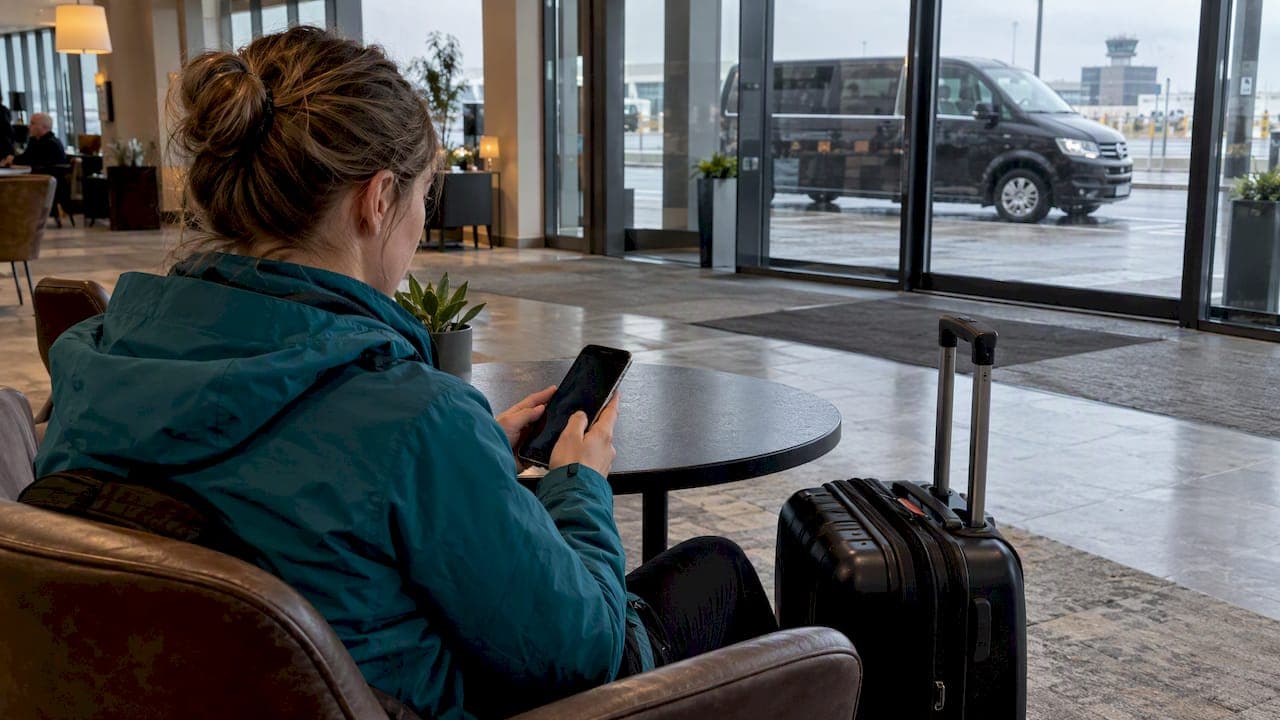
Most private airport transfer providers in Iceland accept Visa, Mastercard, and increasingly American Express, along with contactless payments and mobile wallets like Apple Pay and Google Pay. The one thing to sort out before you fly: make sure your Irish bank can send you a 3D Secure code by text or app, since that's what confirms your online payment. Carry a small amount of ISK as backup, and know that we at EasyTransfer take online card payments with fixed pricing, so there are no surprises waiting for you at Keflavík.
TL;DR:
- Irish travelers’ standard Visa and Mastercard cards generally work for online bookings, but 3D Secure verification may cause payment failures if bank details are outdated.
- Paying in ISK avoids weaker exchange rates from dynamic currency conversion and minimizes the risk of declined transactions during booking.
- Online prepayment is more reliable than paying in person, especially outside Reykjavík, due to variable driver terminal availability and connectivity issues.
- Carrying a small amount of ISK remains a helpful backup, even though Iceland is largely cashless and card payments are predominant everywhere.
- Calling your bank before travel to confirm that your mobile number linked with your card is current significantly reduces payment issues caused by unrecognized transactions.
Table of Contents
- Which payment methods can you use for a private transfer?
- Should you pay online or pay the driver?
- What to check before you board: pickup, receipts, and tipping
- Currency, card compatibility, and bank checks before you fly
- Why payment friction is usually avoidable, not inevitable
- How we make payment simple for Irish travelers booking in Iceland
- FAQ
- Sources
Which payment methods can you use for a private transfer?
Cards do most of the work here. Visa and Mastercard are the standard across Icelandic travel bookings, and American Express is frequently accepted for online transactions too, a pattern confirmed by Icelandair's own payment methods page, which lists all three alongside several debit schemes. If you're booking a transfer online before you travel, you're very unlikely to hit a wall with a standard Irish debit or credit card.
Chip-and-PIN remains the technical norm for in-person transactions, but contactless has caught up fast. Mobile wallets such as Apple Pay and Google Pay work smoothly for online checkout, and a growing number of providers accept contactless taps directly on in-vehicle terminals. That matters if you'd rather tap your phone than hand over a physical card to a driver you've just met.
You might come across Icelandic-specific tools like Netgíró, a local mobile payment service. It's worth knowing it exists, but it's not something an Irish traveler needs to set up. Cards and wallets you already use at home cover nearly every situation.
- Cards: Visa and Mastercard are universal; American Express is common for online bookings.
- Contactless and wallets: Apple Pay and Google Pay work for online payment and many in-vehicle terminals.
- Local options: services like Netgíró exist but aren't relevant for visitors from Ireland.
- Bank transfers: generally reserved for corporate accounts or specific regional arrangements, not everyday bookings.
Should you pay online or pay the driver?
Paying online when you book locks in your price, confirms your seat, and means you're not fumbling with cash or cards the moment you land. Providers ask for prepayment because it guarantees the trip and lets them plan vehicles and drivers around confirmed passengers, not maybes.
Here's what typically happens when you pay online:
- You enter your card details and the system runs a 3D Secure check, sending a one-time code to your phone or banking app.
- Once you approve it, you get instant confirmation and an e-ticket by email.
- If the payment fails, it's almost always the 3D Secure step tripping up, usually because the bank doesn't recognize the transaction or the phone number on file is outdated.
Paying the driver directly is sometimes possible, but it comes with real limitations. Rural pickup points can have patchy connectivity, and not every vehicle carries a working card terminal. If you're relying on paying in person, have a backup plan, including some ISK in cash.
For travel agents booking on behalf of clients, it's worth asking upfront whether the supplier can issue an invoice, what the rules are around using a company card, and what the cancellation and refund terms look like for group bookings. These details save a lot of back-and-forth later.
Pro Tip: Call your bank before you travel and confirm the mobile number linked to your card is current, since that's where your 3D Secure code lands.
What to check before you board: pickup, receipts, and tipping
Once you've booked, a short checklist keeps the pickup itself simple. Bring the same card you used to book, in case the driver needs to verify anything, and keep your phone handy in case a one-time code is needed for any last-minute changes.
- Bring the card used for booking, ideally one with chip-and-PIN enabled.
- Keep your phone charged and accessible for any OTP messages.
- Ask for a receipt or e-ticket, and confirm the currency you're being charged in.
- Carry a small amount of ISK, just in case a terminal is offline.
Tipping isn't expected in Iceland, and drivers won't be offended if you don't add one. If you'd like to tip anyway, ask whether it can go on the card payment or if cash is preferred. Most drivers are happy either way.
If a terminal won't connect, ask the driver whether they can retry the payment or process it manually. If something still doesn't work, contact your booking provider directly rather than troubleshooting from the back seat.
Currency, card compatibility, and bank checks before you fly
Iceland uses the Icelandic króna (ISK), and the country runs on cards far more than cash. According to Icelandair's travel planning guide, Iceland is close to cashless, with chip-and-PIN and mobile payments the norm almost everywhere you go.
Iceland is effectively a cash-lite society, according to Icelandair's own guidance for travelers, which means relying on your card for a private transfer is completely normal, not a risk.
A few practical steps protect you from declined payments and unnecessary fees:
- Choose to be billed in ISK rather than euros when a terminal or checkout asks, since the dynamic currency conversion option usually carries a worse exchange rate.
- Confirm your card supports chip-and-PIN and contactless, and tell your bank your travel dates so a payment from Iceland doesn't get flagged as suspicious.
- Pack a second card as backup, and save your bank's international help line number somewhere you can access it without data.
Why payment friction is usually avoidable, not inevitable
Most payment problems on an Iceland transfer come down to one of two things: a card that wasn't set up for 3D Secure, or a traveler who assumed cash would be the easier option. Neither is really about Iceland. Both are about preparation that takes five minutes before you fly.

The conventional advice tends to focus heavily on carrying cash "just in case." That's not wrong, but it's not where the real risk sits. A small ISK reserve is sensible, but it won't rescue a booking that fails at the online payment stage because your bank didn't recognize the transaction. Irish travelers lose more time to failed 3D Secure authorizations than to any card terminal issue on the ground in Iceland.
If you take one thing from this: call your bank before you travel, confirm your mobile number is current, and prefer to be billed in ISK when given the choice. That single habit prevents more headaches than any amount of cash in your pocket.
— Sergiu
How we make payment simple for Irish travelers booking in Iceland
We built EasyTransfer around the idea that paying for your transfer shouldn't be the stressful part of your trip. Our booking system takes standard card payments online, confirms your ride instantly, and locks in a fixed price with no hidden fees, so there's no currency surprise waiting for you at the airport.

We also track your flight, so a delay on your end doesn't turn into a missed pickup or an extra charge. If you're a travel agent booking for a group or a client, reach out through our site to request an invoice or confirm group terms before you commit, as explained in this helpful Iceland ring road: your complete self-drive guide.
- Online card payments with instant confirmation, so you're not paying the driver in person unless you choose to.
- Fixed pricing agreed at booking, with no dynamic currency conversion tricks.
- Flight tracking that adjusts your pickup automatically if your flight runs late.
- 24/7 support if anything about your payment or booking needs sorting out.
Ready to book? Head over to our private transfers page to check routes and pricing for Keflavík, Reykjavík, the Blue Lagoon, and beyond.
FAQ
Do Iceland transfer providers accept Irish debit cards?
Yes, standard Visa and Mastercard debit cards issued in Ireland work for most online transfer bookings in Iceland. You may need to approve a 3D Secure code sent to your phone, so make sure your mobile number is current with your bank.
What happens if my online payment fails during booking?
A failed payment is usually a 3D Secure issue rather than a problem with the provider's system, often because the bank doesn't recognize the transaction or the phone number on file is outdated. Contact your bank to confirm your details, then try the payment again.
Should I pay in ISK or euros for my transfer?
Choose ISK whenever a checkout or terminal gives you the option, since billing in euros usually triggers dynamic currency conversion at a weaker exchange rate. Iceland's economy runs heavily on card payments, so ISK billing is the standard, practical choice.
Can I pay the driver directly instead of paying online?
Some drivers can take card payments in the vehicle, but connectivity and terminal availability aren't guaranteed everywhere, particularly outside Reykjavík. Prepaying online when you book is the more reliable option, and it's how EasyTransfer handles bookings for Irish travelers.
Do I need to carry cash for an airport transfer in Iceland?
Not really. Iceland is close to cashless, with cards covering nearly every transaction according to Icelandair's travel guidance, but a small amount of ISK is a sensible backup in case a card terminal is offline.